ISSUE 25: The Frontline
A 21st century feminist publication where women's voices have power
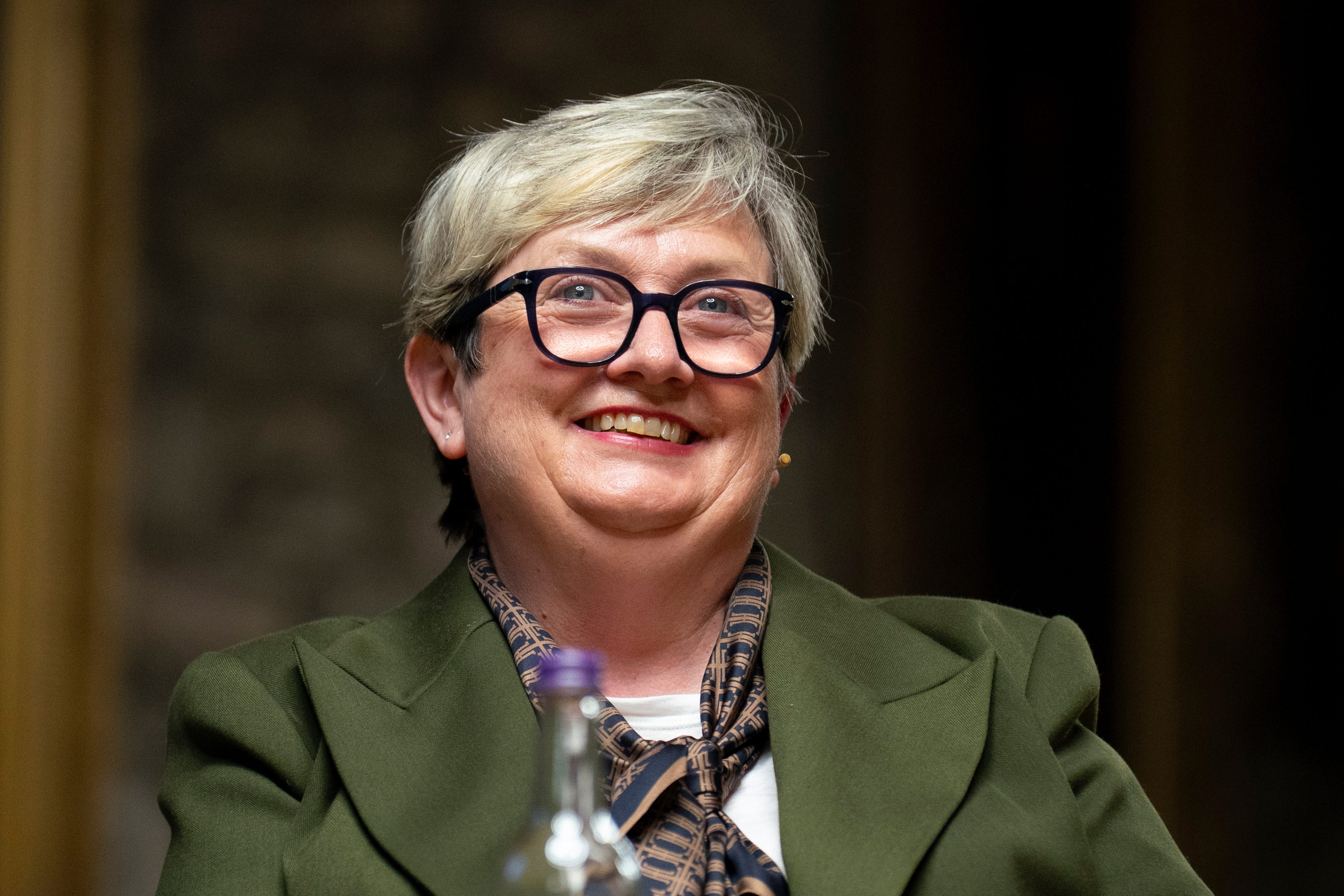
Joanna Cherry KC at her Edinburgh book launch, pic by Iain Masterton

While voters in England, Scotland and Wales wait for the results of yesterday’s election to parliaments in Cardiff and Edinburgh, and local government in England, Issue 25 looks at our political and artistic culture.
The theme of our last issue was women in the arts. We are very grateful to Róisín Murphy for allowing us to make her account of being the target of a campaign of cancellation, and the dangers of chilling effects and self-censorship, part of our archive of women’s stories. We print here the text of the speech she made at last week’s Freedom in the Arts event at Westminster. We also include a link to the recording.
Another woman telling her story recently is Joanna Cherry KC, whose account of her time as a Westminster MP was published last month. We are delighted to have Tess White as our reviewer, who in her own words, is another “lesbian feminist recovering politician”. She continues our theme of women politicians bringing their own experience to bear in reviewing women’s political memoirs, which we began with Johann Lamont’s review of Nicola Sturgeon’s Frankly (in Issue 7, here). As it becomes clearer who has been elected this week, Tess’s response to Joanna’s experience raises questions about the political culture both encountered, as women entering politics relatively late with a distinguished professional history.
The same issues about our political culture emerge from the recent interview by Caroline McAllister for Suzanne Malyon’s Unsilenced Project. Caroline is another woman who entered politics later in her career, in her case as an SNP councillor. The Unsilenced Project is building a collection of audio stories from “those affected by the modern trans movement… to create an archive of stories from ordinary people who have experienced this extraordinary time’’. They are well worth listening to.
Another new development in grassroots women’s media is Jo Bartosch’s TERF Times. Launching soon, she describes it as a “weekly round-up of UK news for those unwilling to abandon reality, alongside links to ‘feminal’ commentary from around the world”. As the backlash to the UK Supreme Court decision in the For Women Scotland case continues, to the very top of governments around the UK, there’s no danger of a shortage of news here, and Jo’s coverage, as an experienced journalist and commentator, will be worth following. Meantime, you can read her account of writing Pornocracy (Polity, 2025) in Issue 13.
As we draw to the end of our first year, we have a new occasional feature, Ann’s Archive, in which long-time campaigner Ann Henderson shares extracts from the material she has kept from her many years of activism for women’s rights. We would love to hear from readers about what they have kept that sheds light on women’s past political struggles.
Last of all, this week we say goodbye to Lily Craven, who joined us for our first year with her Women of the Week. Lily says she does not want any fuss, but we want to thank her for her commitment to bringing women’s history to life, with stories few us knew. She has been inspirational to work with and we are sure readers will wish her well in stepping back from this particular frontline. We will miss you Lily.
The button at the end of this issue takes you to our subscriber chat. As ever, you can also find us in real time on X/Twitter, at @DalgetySusan and @LucyHunterB and our shared account @EthelWrites.
We are delighted that we can now plan for our fortnightly 21st century feminist publication to remain fully accessible. But we depend on some of our readers becoming paid subscribers so that we can pay our contributors, as well as keep the newsletter free so ALL women can access it. If you can afford a paid subscription, please consider getting one.

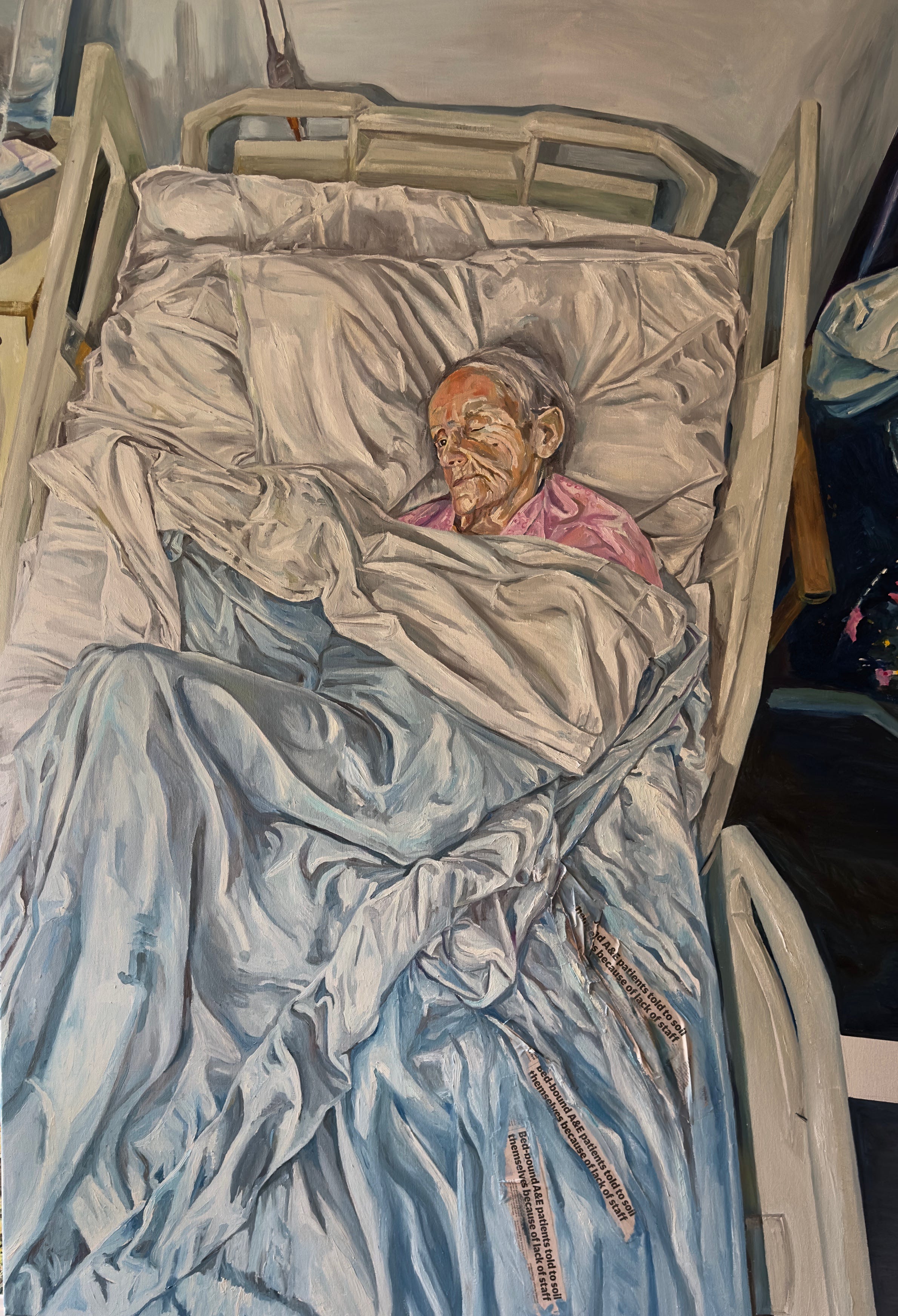
UPDATE In Issue 9 artist Christine Roychowdhury told of the devastating impact of her mother’s fading memory and how her inhumane treatment in hospital inspired a trio of compelling portraits. We have just learnt that Christine’s painting Hospitalised has been accepted in the Royal Scottish Academy’s summer show in Edinburgh. It opens tomorrow (9 May) and is on until the 14 June. Her powerful work is very much worth going to see in person, if you can.

Why the arts need to breathe freely again: one of the music industry’s most original voices on the pain of cancellation, the chilling effects of self-censorship, and age as the last frontier for liberation
By Róisín Murphy
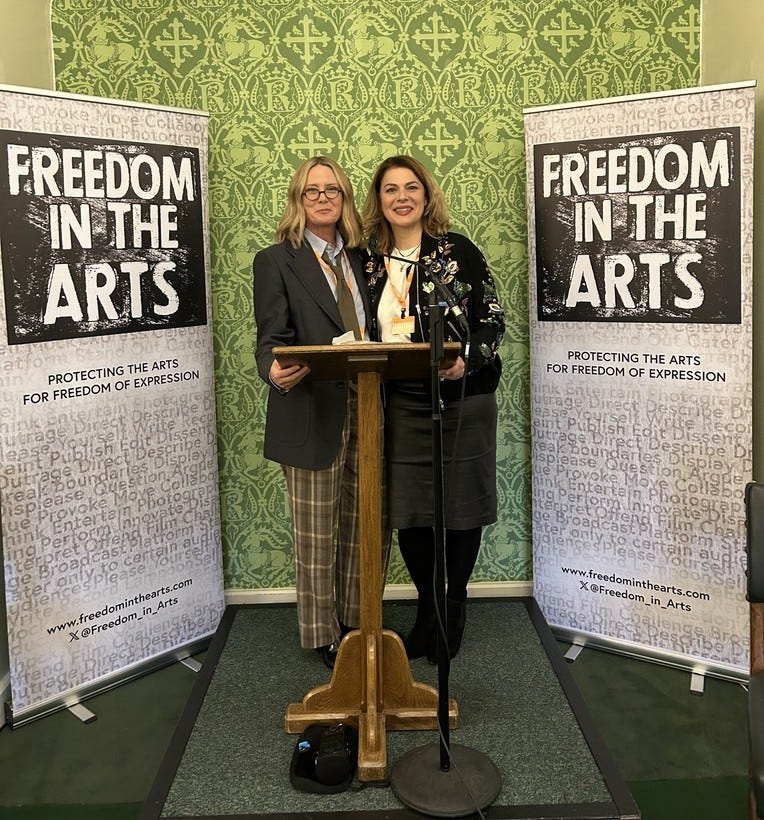
Róisín Murphy (l) with Rosie Kay (r) at the launch of The New Boycott Crisis, House of Lords, 27 April 2026, pic by Paul Rodriguez.
Ladies and gentlemen, fellow artists and creators, thank you for letting me speak freely here today.
This feels very strange for me. I never wanted to become any kind of campaigner. For most of my creative life I’ve preferred a bit of mystery, privacy, ambiguity and above all, the freedom to create whatever I want — I’ve never been a confessional artist. Hastily built identities tend to harden, and as for opinions - well, everybody’s got one!
But things have taken a troubling turn, and my experience might be worth sharing here. For thirty years I’ve lived inside this world - as a singer, songwriter, and my own hands-on creative director. I know its beauty and its brutality. But what I’ve seen in recent years isn’t just the usual ups and downs of creative life. It’s a slow, systematic narrowing that turns art from wild exploration into careful calculation.
Plain speaking led to my exile as an artist
When artists speak plainly these days, especially on radioactive issues, they don’t get debate. They get condemnation and professional exile. I’ve lived it. After I spoke my mind about puberty blockers and current social trends around gender, I watched the machinery kick in fast: pressure to recant, threats to pull promotion, leaks to the press, venues dropping bookings, colleagues stepping back. The message was clear: conform, or risk your livelihood.
I fought for my work. I took back ownership of my music. But the wider chill remains. Many others don’t fight back - they self-edit, or simply stop. I completely understand the disillusionment.
Being cancelled is hard. I won’t sugar-coat it. The world goes very dark, very quickly. Everyone and anyone who was ever going to disappoint you, does so, all at once. Networks of interwoven friendship and career that took years to build - collapse overnight. All the hypocrisy, frailty, and hidden disloyalty gets exposed at once. It’s bewildering and it’s a bitter pill.
Personally speaking, as a woman in her 50’s with a black mark against my name, stepping out into any sort of public discourse, making myself visible in any form, invites not only attacks on my morality and my work but inevitably on my appearance and on my age too. These are nasty childish tactics designed to make me afraid to speak up, or even be seen at all, it can be extremely difficult to take. With stunning hypocrisy, It seems age is the last frontier for liberation and fair game for budding justice warriors.
Too many artists self-censor
But here’s the deeper problem: crippling self-censorship. The best art comes when artists are wide open and vulnerable, when nothing is censored, great ideas arrive only when the mind is free. Today, too many creators feel they must weigh every word, every image, every subtext.
Questions irrelevant to the creative process itself - flood the mind. Will this offend the wrong people? Will I lose my funding? Will the media turn on me?
Every new cancellation is a warning shot. Young creators learn early: play it safe or be stained. Established voices hold back in podcasts and interviews, playing a political game.
For performers, the precious flow state vanishes when part of the audience is scanning for a thought crime.
Meanwhile, a noisy minority - often very confused young people caught in cycles of pornography and niche online communities - have made themselves the social media enforcers. Small groups with multiple accounts can trigger the cancellation of events and whole careers. And yet, however disconcerting the trolling may be, what’s truly terrifying is seeing institutions and media go along with it. I wonder these powerful cultural gatekeepers ever check who’s really behind the outrage. This isn’t protecting the vulnerable. It’s enabling mob hysteria, only to turn away and ignore the chaos and violence it sometimes descends into.
Public funding, meant to support excellence regardless of politics, has become an ideological points system. Projects that question the current line on sex and gender, for example, find doors closed, while those that affirm it flow with support. This isn’t patronage. It’s patronage with strings attached so tight they strangle the critical thinking it takes to invent anything.
Market forces are at play too. When a subculture is turned into a market-demographic and then policed into orthodoxy, what started as a vibrant open minded community- hardens into dogma, hostile to personal growth and individuality. It’s sad to see but the more tragic and delusional cancel culture becomes, the more it will expose its own hypocrisy, cruelty, and complete lack of self-awareness and ultimately, do some of the work of discrediting itself.
History repeating itself
It’s not the first time in history artists have faced oppression and it won’t be the last. Lets not turn on each other. As artists and creatives, we have far more in common than anything that divides us. We should support each other, come together and defend our shared space, our territory, the place where imagination can roam free.
Because if they come for one of us they will eventually come for all.
The creative soul of this country, and of Europe, has always thrived on discomfort, on the freedom to be wrong, to offend, to pivot, and to surprise ourselves. Without that freedom, we don’t get better art. We simply put artists in a chokehold and suffocate life out of our culture.
We need free inquiry and open debate. The arts - must - breathe freely again.
Thank you.
Róisín Murphy is an Irish singer, songwriter and performer, known first as one half of Moloko and later for a hugely acclaimed solo career in pop and electronic music. Renowned for her originality, wit and fearless artistic identity, she is widely regarded as one of the most distinctive and influential performers of her generation. She is donating her fee for this piece to Freedom in the Arts.
At Freedom in the Arts in Westminster you can watch recordings of the speeches by Róisín and others at the parliamentary launch of The New Boycott Crisis, and find links to the report and accompanying Art Beyond Boycott Toolkit.
Also, enjoy Róisín’s Auntie Linda’s review.

A toxic decade of power: Recovering politician Tess White reviews Joanna Cherry’s unflinching account of loyalty, betrayal and the cost of speaking out to protect women’s rights and keep her dream of Scottish independence alive
By Tess White
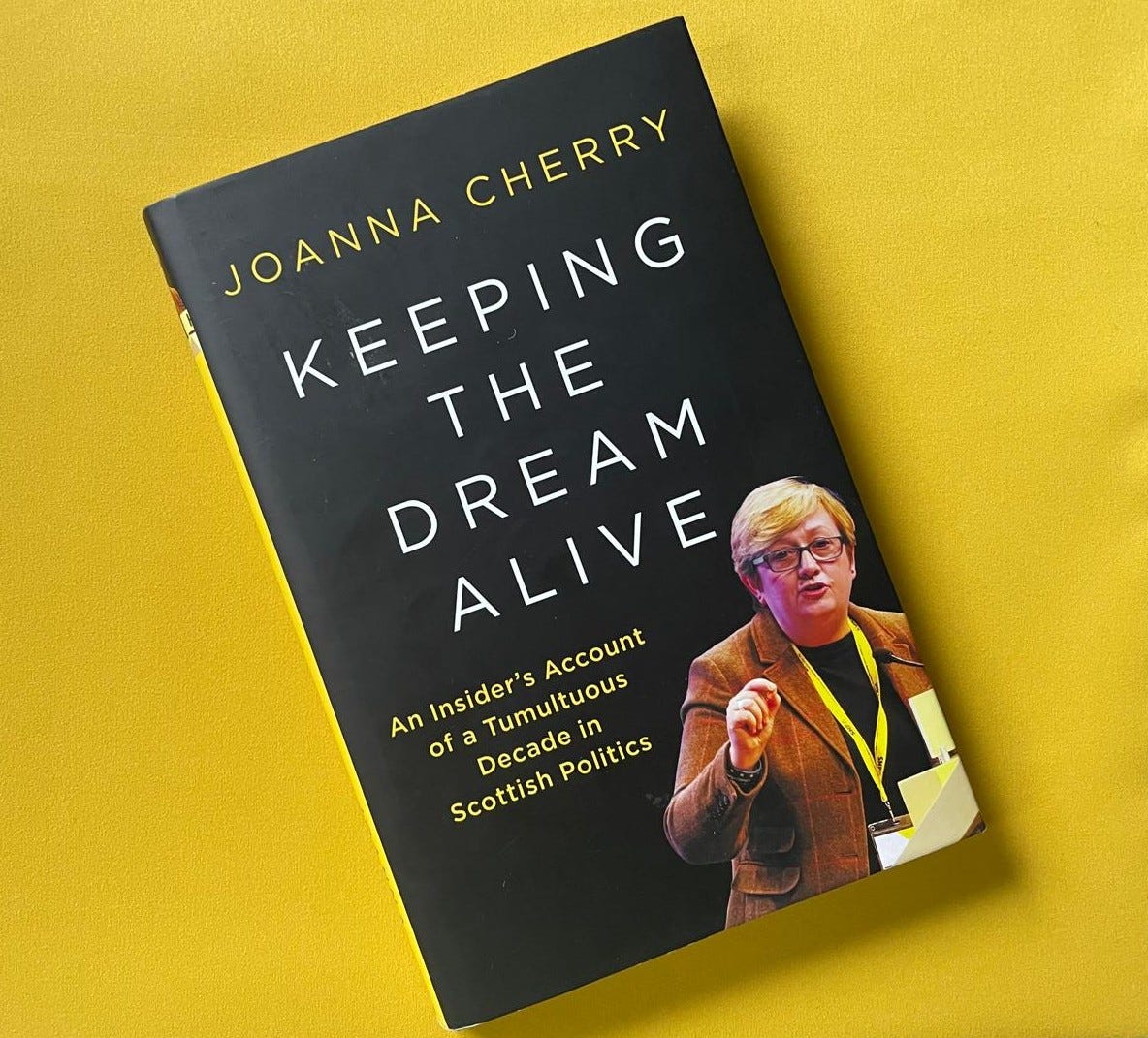
Pic by Lucy Hunter Blackburn
For anyone wanting to read an informed and honest account of the last ten years in Scottish politics - both in Holyrood and at Westminster - this is it!
From the first page of Joanna Cherry’s new book, Keeping the Dream Alive: An Insider’s Account of a Tumultuous Decade in Scottish Politics, it is apparent that this is no ordinary political memoir. It is a deeply personal, often unsettling read, which fast becomes an evisceration of the SNP’s leadership and governance of Scotland during a shameful third decade of devolution.
I write this review in full humility, as a lesbian feminist recovering politician and successful HR professional reviewing the book of a three-term, lesbian feminist recovering politician and successful KC, but from opposite sides of the constitutional spectrum.
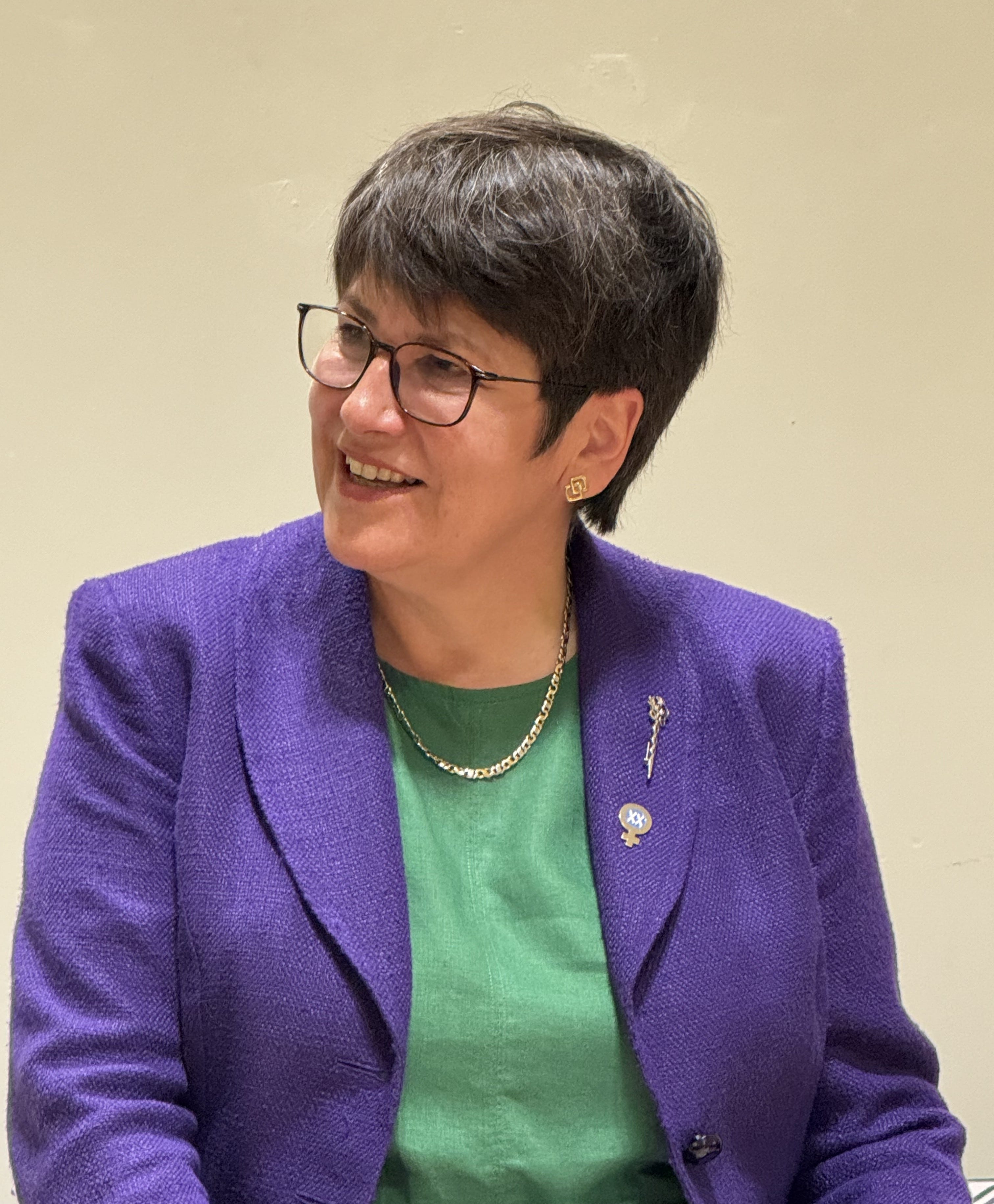
Recovering politician Tess White, pic via Tess
At its heart, this book reveals the ugliest side of party politics. It tells how a female politician, of undeniable intellect and conviction, became embroiled in the SNP’s bitter internal battles, post the 2014 referendum. Joanna emerges as a modern-day political Boudica: resolute, embattled, and unwilling to yield in the face of sustained hostility by the leader of her own party. Her story is rich in political insight, suffused with a sense of pain from wrongdoing. There is courage here, but also the unmistakable imprint of personal cost.
SNP’s toxic culture
Joanna chronicles her experience of a relentless campaign against her: hostility, marginalisation, and calculated attempts by her own colleagues and the party leadership, to undermine her. The tone throughout is not one of self-pity, but of weary embattlement. She lays bare what she describes as a toxic culture within the SNP, offering us a front-row seat to internal dynamics that are as bruising as they are revealing. The portrait painted is alarming: a political environment where loyalty is abused, challenge is punished, and power is guarded with a Machiavellian intensity.
Central to the book is a stark warning, especially to the SNP, drawn from bitter experience. She argues persuasively that politics cannot simply be about winning elections. It must also be about the responsible use of power. Joanna suggests that post 2014, the SNP leadership has too often abandoned this principle, replacing it instead with cynical strategy based on press soundbites, broken promises, incompetence, and a culture which sacrifices integrity for absolute control. The result, with many examples, is an incompetent government.
Joanna’s legal acumen is clear in sections of the book addressing constitutional matters and Brexit. While I do not agree with her on the constitutional debate, her analysis is both thoughtful and clear.
Equally compelling, and deeply disturbing, are the revelations concerning the machinations at the highest levels of government. Joanna recounts instances that suggest a toxic culture of opacity which raise serious concerns about a lack of transparency, accountability and trust at the heart of the SNP government in Edinburgh. This resonated deeply with me, having just endured the five years as an MSP in the Scottish Parliament, choosing to stand down in April.
Sturgeon’s authoritarian style
The book does not shy away from naming names. First Minister Nicola Sturgeon an effective communicator, but her leadership often defined by insecurity with authoritarian tendencies. Joanna’s reflections on party culture highlight what she sees as entrenched hypocrisy and a persistent imbalance of power. Rotten to the core.
There are also moments of reflection on colleagues across the political spectrum, where Joanna’s respect for those who engage constructively is evident. I have found this myself, as many of us, from across all parties, united in courage against the SNP’s obsession with self-ID and the destruction of women’s rights.
Her commentary on the SNP’s treatment of Alex Salmond is jaw dropping. While acknowledging his political skills, she reveals a relationship marked by loyalty but eventually disappointment - a dynamic that speaks to broader themes of trust and betrayal within political life.
Joanna sees the separation of Scotland from the UK as a dream. Indeed, she calls her book Keeping the Dream Alive. I am sure she will not be surprised that I, as someone who believes in the UK, see it instead as a keeping “the nightmare” alive. The irony is not lost on me, and I am sure many of her readers, of her choosing to take refuge during what she calls “the worst times”, by renting a cottage in Northumberland which she describes as the “relative safety of England”.
Our common ground unites us
But it’s our common ground more than our differences I want to concentrate on here. Perhaps most striking is the emotional undercurrent that runs throughout the book. This is not merely an exposé - it is a testament to resilience. Joanna writes as someone deeply wounded, yet not defeated - someone who continues to believe in the importance of proper governance and of standing up for truth, fairness, and the rights of women and girls.
In the end, this is a book that unsettles as much as it informs. It challenges the reader to look beyond the surface of political life and to confront uncomfortable questions about the nature of power and the price of holding on to one’s principles. For anyone seeking to understand the realities behind Scotland’s recent political history, it is not just recommended reading - it is essential.
Tess White was an MSP for the North East Scotland Region from 2021 to 2026 for the Scottish Conservatives. During her time as an MSP, she served as Shadow Minister for Equalities and sat on the Equalities, Human Rights and Civil Justice Committee. Prior to becoming an MSP, she worked at a senior level in the energy sector, specialising in HR. She is a Fellow of the Chartered Institute of Personnel and Development, keen golfer and swimmer and holds a 2nd Dan Karate Black Belt. She is donating her fee from this piece to the Glasgow & Clyde Rape Crisis Centre, which provides a fully single-sex service to support women and girls in the Glasgow and Clyde area who have experienced rape or sexual violence.
Ann’s Archives: An occasional series of the highlights from Ann Henderson’s personal collection of political memorabilia
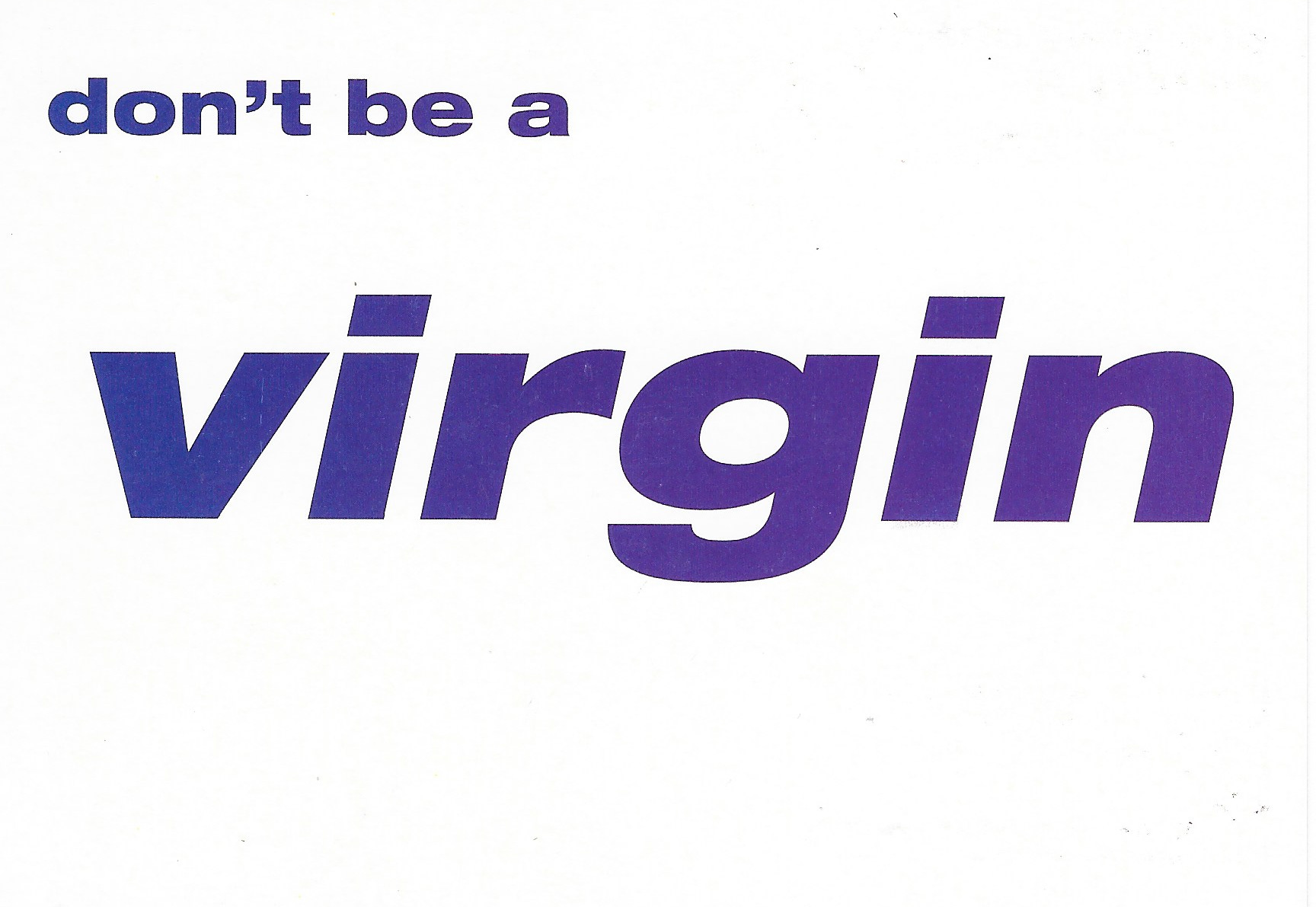
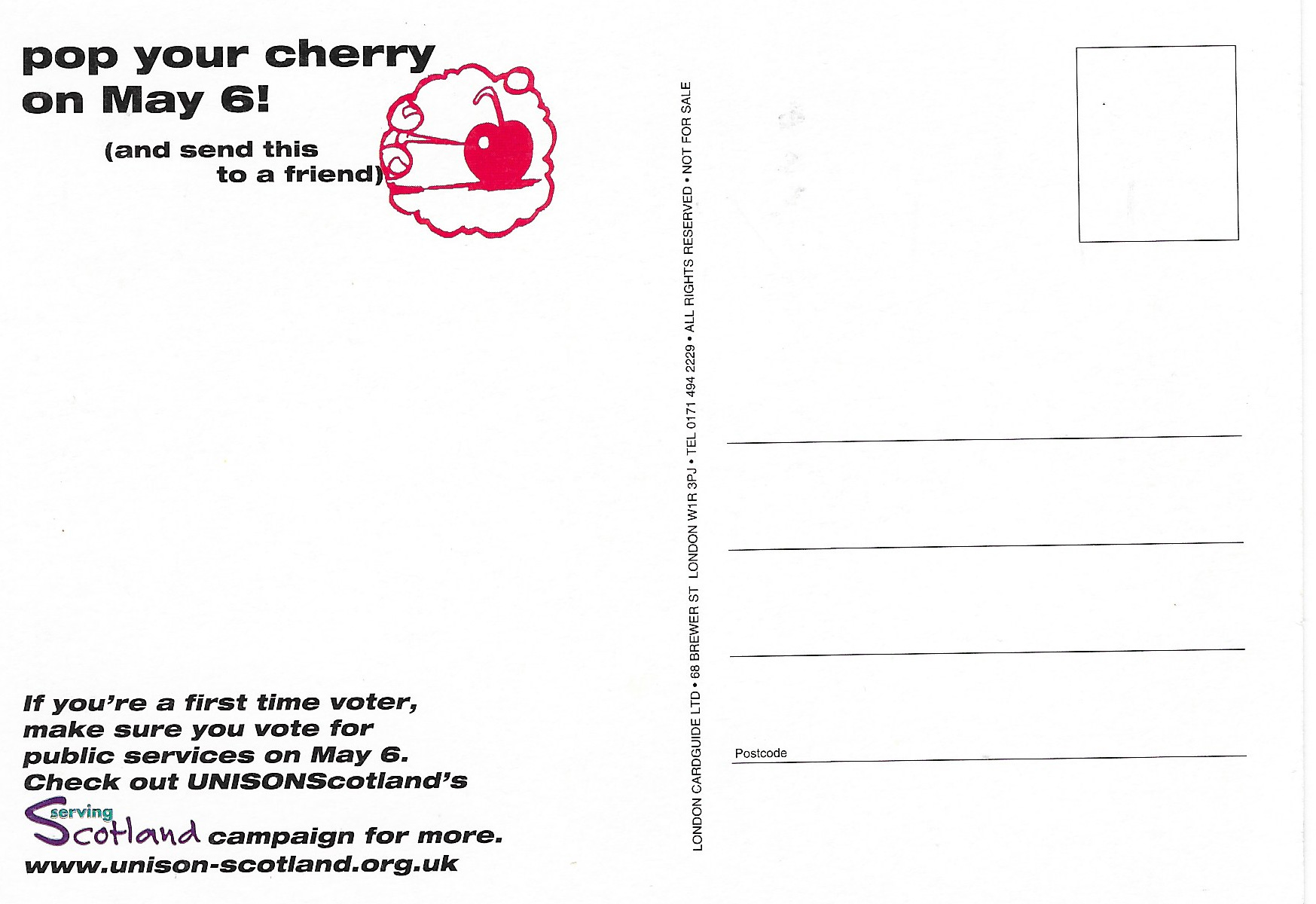
Postcard distributed by Unison, 1999
The long-awaited first elections to the Scottish Parliament took place on May 6, 1999. Shockingly, the trade union UNISON issued this postcard (see above) to encourage first-time voters to vote. Ann, who was a member at the time, took it up with Mike Kirby, then Scottish Secretary of UNISON. As she recalls, he replied saying it was nothing to do with him.
She says: "For a trade union with a significant proportion of female members, I was particularly surprised at how badly judged this was. How often do we hear 'it's just a bit of banter', 'feminists have no sense of humour', 'it was just meant as a bit of fun' - if trade unions are serious about representing and respecting their women members, then this type of campaign should have had, and has, no place in a trade union’s communication strategy.”
A trade union might not issue a postcard like this now. But in the week of the 2026 Scottish Parliament elections, women trade unionists are still fighting for their rights. This week, Fiona MacDonald had the first day of her employment tribunal against her union, the Public and Commercial Services Union (PCS), and Alison-Ann Dowling and Norma Austin Hart were granted permission to pursue their case against their union, Community, for its equality strategy’s unlawful treatment of sex as a protected characteristic, and for victimisation. More about both these cases can be found in Issue 11 here.
Ann Henderson has worked in the rail industry, in community development, in the Scottish Parliament, and in a senior role at the STUC. She is a committed trade unionist, activist in the women’s movement, and has played a role in the Abortion Rights campaign, formerly the National, and Scottish, Abortion Campaign, since the 1970s. She served as Women’s National Commissioner for Scotland 2008–2010, and as University of Edinburgh Rector 2018–2021.

Navigate the public policy maze with the editors as they keep a watching eye on the issues affecting women

Pic by: akinbostanci via iStock
We are all busy, so it is hard to keep up with what people in power are up to - particularly in relation to policies and services that affect women and girls. We can’t offer a full monitoring service, but in each edition we will highlight a few things to watch out for, and where you can find more information.
At the time of writing, results from elections to English local councils, the Scottish Parliament and the Welsh Senedd have still to be announced. The Welsh and Scottish counts will happen during the day on Friday, as will the counts for the English mayoral contests, though some individual local councils may count sooner. BBC News has a UK Elections 2026 site where you can follow the results.
Pic by PoppyPixels via iStock
Meanwhile, the Prime Minister is busy finalising the King’s Speech which will be delivered by King Charles III at the State Opening of Parliament on Wednesday May 13, around 11.30 am. Based on early 2026 political discussions, the King’s Speech is expected to prioritise several key areas for women including:
Violence Against Women and Girls: Continued emphasis on reducing violence against women and girls, with promises to strengthen policing and support for victims. This includes the Crime and Policing Bill and the Victims, Courts and Public Protection Bill.
Employment Rights and Equality: A “new deal for working people” is expected, including making flexible working a default from day one and strengthening protections for new mothers, such as banning the dismissal of new mothers for six months after returning to work.
Addressing Economic Disparities: The government is expected to focus on tackling the gender pay gap and the disproportionate impact of the cost of living on women.
Find out more about the history of the speech from the throne and its contemporary significance here.
UK Parliament click here for future business
Northern Irish Assembly click on ‘Business Diary’ for a week by week schedule
Scottish Parliament and Senedd Cymru | Welsh Parliament will sit again next week. In each case, the first few sittings will see members sworn in, the choice of Presiding Officer, and First Minister.

All content is protected: articles may not be reproduced without permission from the authors or this newsletter. For any reuse requests, please contact us in the first instance.