ISSUE 18: The Frontline
A 21st century feminist publication where women's voices have power
Image via iStock

Welcome to Issue 18. For one edition only, we are departing from our usual format of two or three short pieces, and publishing a single long read, The Archive Keeper, because cutting this piece down was out of the question.
It’s an important story, Here at The Frontline we can at least magnify voices and hope that that will help women make more connections.
We hope you will share The Archive Keeper widely. It is an important and compelling testimony of the battles women continue to fight, simply to hold on to our most basic rights and our material reality.
The button at the end of this issue takes you to our subscriber chat. As ever, you can also find us in real time on X/Twitter, at @DalgetySusan and @LucyHunterB and our shared account @EthelWrites.
We are delighted that we can now plan for our fortnightly 21st century feminist publication to remain fully accessible. But we depend on some of our readers becoming paid subscribers so that we can pay our contributors, as well as keep the newsletter free so ALL women can access it. If you can afford a paid subscription, please consider getting one. Thank you.


A FRONTLINE LONG READ: The Archive Keeper is the searing story of a Black feminist’s struggle to hold the line against the relentless invasion of gender identity theory into women’s sex-based rights in South Africa
By Anonymous
Image via iStock
Mxenge’s study was not a room; it was an archive of resistance, a physical testament to a life spent on the front lines. The walls breathed stories. Tacked beside a faded poster for the One in Nine Campaign was a photograph of a young Fezikile, her face a mask of fierce determination, fist raised at the head of a National Organisation of Women march in the ‘80s.
Below it, a laminated press clipping from the recent Total Shutdown marches, the headline a visceral scream: “My Body, Not Your Crime Scene.” She had organised that protest. It reminded her of the lineage, the unbroken chain of resistance stretching all the way back to the defiant women of 1956. The shelves overflowed not with pristine academic texts, but with the sacred, battered artefacts of struggle: stacks of yellowed pamphlets, SPEAK t-shirts, newsletters printed on illicit presses, and well-worn books whose spines were cracked from being passed through dozens of hands in townships and union halls. This space was a living repository of the South African women’s movement, and Fezikile was its devoted librarian.
A life’s work of female struggle against male violence
In her fifties, her movements were more deliberate, but her eyes held the same fire that had faced down riot police in Mello-Yellos and intransigent patriarchs for over forty years. She was arranging her notes, the culmination of a life’s work, for the first draft of her doctoral thesis. This PhD was not a late-career pivot or a vanity project; it was a promise. A promise to the women of Crossroads whose shacks she had helped rebuild, to the widows of Marikana whose stories she had recorded, to the countless faces she had held and voices she had amplified. It was a promise that their struggles—their specific, female struggles—would not be erased, theorised into irrelevance, or rewritten to suit a new, fashionable agenda.
Her thesis title was precise, a reflection of her praxis: “The Architecture of Resistance: A Praxis of Feminist Organising Against Male Violence in Post-Apartheid South Africa.” It was a work grounded in the material reality of women’s bodies, a deep analysis of the specific drivers of male violence—the toxic interplay of patriarchal tradition, economic disenfranchisement, and the brutal legacies of apartheid—and the practical, often dangerous, strategies she and her comrades had forged in the crucible of that violence. It was a thesis written in sweat, tears, and the ink of protest placards long before it was ever typed onto a page.
Beyond biological reality
A faint, bittersweet smile touched her lips as she recalled her PhD acceptance. She had felt a surge of hope, a sense of coming full circle. She had respected Professor Madi and Professor Benny, seeing them as the next generation of Black feminist scholars. They were sharp, published, and held senior positions in what had, in a sign of the times she had initially welcomed as progress, been renamed the Department of Gender Studies from its original incarnation as Women’s Studies. “We need to move beyond the biological,” she remembered Professor Madi saying at an orientation, and Fezikile had nodded, thinking she meant moving beyond the biological determinism of the oppressors. She had not understood then that they meant moving beyond the biological reality of women. She had imagined they would be the ones to help her build a bridge between the street and the academy, to give her life’s work the theoretical scaffolding it needed to endure. She had felt, then, a sense of handing over a baton. It was a hope that felt impossibly, painfully distant now, after a year of her draft being ignored, of emails that went unanswered, of files that were mysteriously ‘corrupted,’ and of meetings that were endlessly postponed due to ‘competing departmental priorities.’
Fezikile entered the supervision meeting with the quiet pride of a craftswoman presenting her life’s work. The air in the small, sterile office, smelling faintly of disinfectant and stale coffee, was initially warm. Professor Madi, chic in a way that spoke more of international conferences than community halls, began with a smile that didn’t quite reach her eyes. She praised the draft’s “passion” and its “significant historical weight,” her words draping the thesis in a shroud of respectable, but ultimately defanged, admiration.
Naming male violence became ‘hate’
Then came the pivot. “We feel the analysis could be strengthened, Fezikile,” she said, her voice softening into a tone of gentle conspiracy. “Strengthened by expanding your framework to be more inclusive of the violence experienced by trans, gender non-binary, and queer individuals.” The jargon flowed effortlessly, a cloud of anaesthetising theory designed to obscure the violence of the suggestion itself: “intersectional modalities,” “decentering the cis-female subject,” “a more capacious understanding of gendered violence.”
Fezikile remained calm, her posture unchanged. She had faced down armed men; she would not be cowed by academic rhetoric. “Thank you for the feedback, Professor,” she began, her voice even. “But my methodological focus is precise for a reason. My research is about a specific, sex-based phenomenon rooted in the material reality of the female body. Violence against our trans comrades is real, and it is a struggle we must all support, but its drivers and manifestations are different. To conflate them would be an analytical error, a disservice to both struggles. With respect, that is not my topic.”
Professor Benny, who had been silent until now, leaned forward. Her glasses sat low on her nose, and she peered over them like a prosecutor. “With all due respect, Fezikile,” she countered, her tone sharp and devoid of Madi’s feigned warmth, “that position is highly problematic. It reinforces a cis-normative, biological essentialism that is fundamentally at odds with contemporary Black feminist thought.”
“Cis-normative?” Fezikile repeated the word slowly, as if tasting something bitter. “Professor, I am speaking about the reality that South Africa is the rape capital of the world. I am speaking about the fact that biological women—what you call ‘cis women’—and lesbians are the primary victims of this violence. These are not abstract categories. These are bodies. Real bodies that bleed, that carry pregnancies forced upon them, that are mutilated and murdered.”
Professor Madi interjected, her voice taking on a pained, pedagogical tone. “But Fezikile, by centering only cis women in your analysis, you are engaging in a form of erasure. Trans women experience violence too, and by excluding them from your framework, you are participating in their marginalisation. Some would argue that this exclusion is itself a form of violence.”
The absurdity of the claim hung in the air. Fezikile felt a cold fury rising in her chest. “Violence,” she said, her voice low and controlled. “You are calling my decision to document the specific phenomenon of male violence against female-bodied people... violence? I have held women whose faces were beaten beyond recognition by their husbands. I have sat with rape survivors in hospital wards. I have buried women who were killed for being women. And you are telling me that my refusal to dilute that analysis is violence?”
Professor Benny’s expression hardened. “Your refusal to engage with the complexity of gender identity is reductive. It reduces people to their biology, which is exactly the logic that patriarchy uses to oppress us all.”
The temperature in the room dropped. The debate was no longer about methodology; it was an interrogation.
Fezikile drew on her arsenal of lived experience, her voice resonating with the authority of four decades on the front lines. She spoke of the specific needs of a woman fleeing a violent husband, the targeted horror of ‘corrective’ rape inflicted on lesbians, the unique trauma of rape as a tool of patriarchal control, the way the female body itself becomes a site of political contestation. She spoke of the Marikana widows, of the women in the townships who had no access to post-rape care, no resources to escape abusive partners, no political will from the state to protect them. They countered with abstract theories from books she knew they had only read, not lived. It was the raw, bleeding wound of experience against the sterile, stainless steel of theory.
Then, Prof Benny delivered the killing blow, her voice laced with a triumphant, righteous fury. “I have to be honest,” she said, her eyes glinting. “I am shocked to hear this kind of TERF rhetoric from you, of all people.”The acronym, alien, hung in the air between them. It was a branding, a sentence. Prof Madi, ever the performer, sighed dramatically, a mask of profound disappointment settling on her features. “We just want your work to be safe, Fezikile,” she murmured, as if consoling a wayward child. “This line of argument… it isn’t safe in the current climate. We’re only trying to protect you.”
Protect her. Fezikile looked from one to the other. They weren’t trying to protect her. They were trying to neutralise her. And in their eyes, she saw not the future of feminism, but the chilling face of its capture.
Holding the line for the next generation
Fezikile walked out of the Department of Gender Studies, the glass doors sliding shut behind her with a soft whoosh that felt like a final exhalation. Her heart, a veteran of so many struggles, was pounding with a grief that was sharper and more bewildering than anger. Anger was a familiar comrade, a clean fire. This was a cold, creeping poison. It was the betrayal of being branded an enemy, a heretic, by women who claimed her lineage, who stood on the shoulders of giants she had known by name.
That night, Fezikile couldn’t settle. The walls of her study, usually a source of strength, felt like they were closing in. She picked up the phone and dialled a number she knew by heart. “Yebo?” a voice crackled, warm and familiar.
“Nomvula, it’s me.”
“Fez! I was just thinking about you. How is the big professor?”
Fezikile let out a breath she didn’t know she’d been holding. Nomvula, her comrade since the days of the UDF, a woman who had faced down Casspirs with nothing but a song and an unshakeable belief in liberation. “The big professor is tired, Nom. They’re trying to tell me my life’s work is wrong.”
She explained the meeting, the jargon, the accusation. Nomvula was silent for a moment, then she let out a low, dangerous laugh. “These children,” she said, the affection in her voice mixed with pure steel. “They read a book from America and suddenly they know our struggle better than we do? They want you to write about ‘gendered bodies’? Ask them if they know what it’s like to be a child bride at nine years old. Ask them if a ‘gendered body’ can get pregnant after being raped by a soldier. Ask them if a ‘gendered body’ has to fight for maternity leave. Since when do we ask them for permission to tell our own stories, Fez? You are Fezikile Mxenge. You tell them to go to hell.”
The email from Professor Madi arrived that evening, a masterclass in the velvet glove of institutional power. “I’m worried about you, Fezikile,” it began. “That was a very intense meeting, and I want to make sure you’re alright. I know you are passionate, but this rigid stance could jeopardise not only your thesis but your funding. We onlywant to help you navigate the complexities of the modern academy. Perhaps if you read the latest work by...”
The list of authors was a roll call of the very theorists whose abstract pronouncements erased the material reality of women’s lives. It was an offer of re-education disguised as a helping hand. The next meeting was the final violation. Professor Benny, armed with a stack of freshly printed journal articles, dispensed with all pretence of dialogue. She lectured. She began by projecting a PowerPoint slide with the title “Decolonising Feminist Praxis: Beyond the Gender Binary.”
Fezikile watched, stone-faced, as Benny clicked through slides filled with Venn diagrams and theoretical frameworks, each one further removed from the reality of women’s lives. “True Black feminism,” Benny intoned, “is a project of dismantling all binaries, of deconstructing the very category of ‘woman.’ The colonial project imposed rigid gender categories on African societies. By focusing on biological sex, you are replicating that colonial violence.”
Fezikile felt something snap inside her. “Professor,” she said, her voice cutting through the lecture, “are you seriously suggesting that the concept of ‘woman’ is a colonial imposition? That before colonialism, African women did not know they were female? That the violence we experience—rape, forced marriage, genital mutilation—is somehow less real because you have decided that biology is a Western construct?”
Benny’s jaw tightened. “Your lived experience is powerful, Fezikile,” she said, the condescension dripping from every word. “But in the academy, it is merely anecdotal. It must be theorised through a proper critical lens to have any validity.” This from women who had never set foot in a police station to report a rape, who had never organised a protest for a murdered woman, who had never sat with a mother whose daughter had been killed by her boyfriend.
Professor Madi added, almost gently, “We’re asking you to consider that your framework might be exclusionary. That by using terms like ‘women’ and ‘female,’ you are creating a hierarchy of victimhood that privileges some bodies over others.”
Handmaidens not revolutionaries
And in that moment, the fog of her grief and confusion lifted, replaced by the cold, hard clarity of the front line. Fezikile looked at the two women before her and saw them for what they were. They were not mentors; they were gatekeepers. They were not scholars; they were careerists. Their “wokeness” was not a political commitment but a currency, a fashionable new dialect they had mastered to trade for institutional power, for research grants, for the approval of a Western academic complex that was always hungry for new, exotic theories from the Global South. They were handmaidens, not to a revolution, but to an ideology that was consuming its own. They were not trying to improve her thesis. They were trying to break it—and her—to prove their own loyalty to the new creed.
Fezikile sat in her study, the archive of her life’s work bearing silent witness. The marked-up draft of her thesis lay on the desk before her, its pages bleeding with the red ink of her supervisors’ comments. She read them slowly, each one a small violence. “Replace ‘women’ with ‘gendered bodies,’” one comment read. “Reframe ‘male violence’ as ‘interpersonal violence,’” instructed another. In the margins of a paragraph about femicide, Professor Madi had written: “This language is exclusionary. Consider: ‘violence against feminised bodies.’” On a page documenting the specific trauma of pregnancy resulting from rape, Professor Benny had scrawled: “Essentialist. Not all women can become pregnant. Revise to be inclusive of all gender identities.”
Fezikile stared at that last comment for a long time. Not all women can become pregnant. This was true—some women were infertile, some were post-menopausal, some had had hysterectomies. But that was not what Benny meant. She meant that the category of “woman” must be expanded to include people who could never, under any circumstances, become pregnant because they were male. And in service of that expansion, Fezikile was being asked to erase the specific reality of female reproductive vulnerability as a site of male violence and control.
To accept these edits would be to perform a monstrous act of ideological surgery, to gut the heart and soul of her work, to lie. It would be to betray every woman whose story she carried in her bones. It would be to tell the widows of Marikana that their specific grief—rooted in their roles as wives and mothers in a patriarchal society—was somehow less valid than an abstract theory of gender. It would be to tell the rape survivors that their trauma was merely “anecdotal.”
With a steady hand that had once held placards, comforted survivors, and signed affidavits, Fezikile took a single, clean sheet of paper. She began to write. It was not a rebuttal. It was not an appeal. It was a formal letter of withdrawal from the PhD programme. The words were spare, professional, and imbued with a power her supervisors would never understand. She stated simply that she had concluded that “irreconcilable methodological and ethical differences” prevented her from continuing in a way that would maintain the integrity of her research and her life’s work.
Months later, the scene is not the hushed, sterile quiet of the university library. It is a vibrant, noisy community hall in a township, the air thick with the smell of magwenyas and the irrepressible energy of young women. Fezikile stands at a makeshift podium, not defending a thesis, but sharing a history. She is telling them the real stories, the unfiltered truths of the struggle, her voice a lifeline connecting the past to the present. A young woman in the front row, her eyes wide with recognition, raises her fist. In that moment, the torch is not being handed over to the academics; it is being passed to the next generation of activists.
As the meeting ends, the camera pans to Fezikile’s bag. Tucked inside is a thick manuscript, its title bold on the cover page. It is not a thesis. It is a book. Her book, written on her own terms, for her own people. The academy had lost a scholar, but the movement had kept its elder. She had held the line.
Wathint’ abafazi, wathint’ imbokodo, uzakufa!
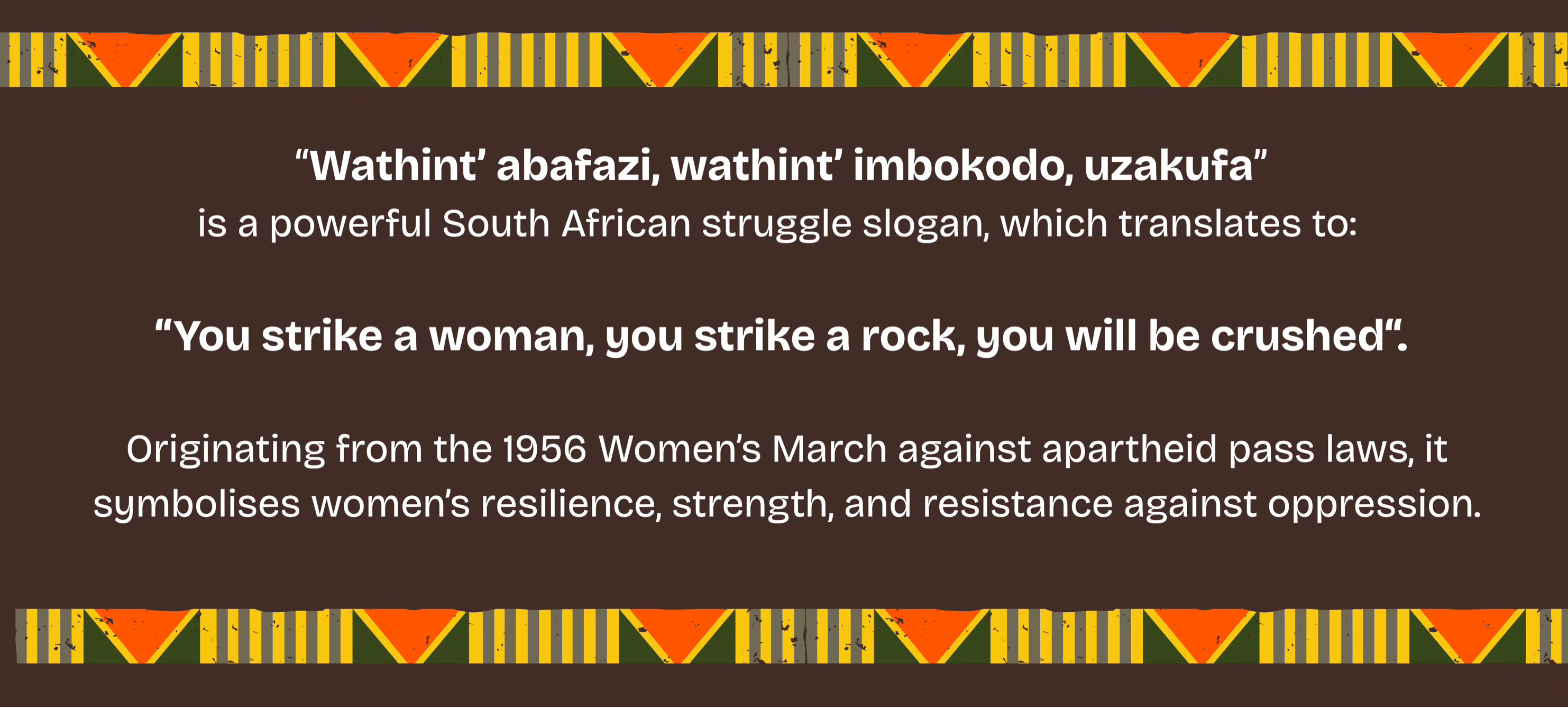
Names and identifying details have been changed to protect anonymity.
"Remember Khwezi” refers to Fezekile Ntsukela Kuzwayo, the woman who reported her rape by the former president of South Africa. To protect her identity and her life from the severe retaliation she faced—including "death by burning" threats—the feminist movement here respectfully renamed her "Khwezi" (meaning "star") during her activism and trial. Her courage, and the solidarity she inspired, live on in our memory. In her story, our anonymous author has used her name for the main character as a quiet tribute.

Atta girl! The story of Miriam Makeba, the South African singer and anti-apartheid campaigner whose refusal to stay silent forced her into exile for thirty years
By the Frontline editors
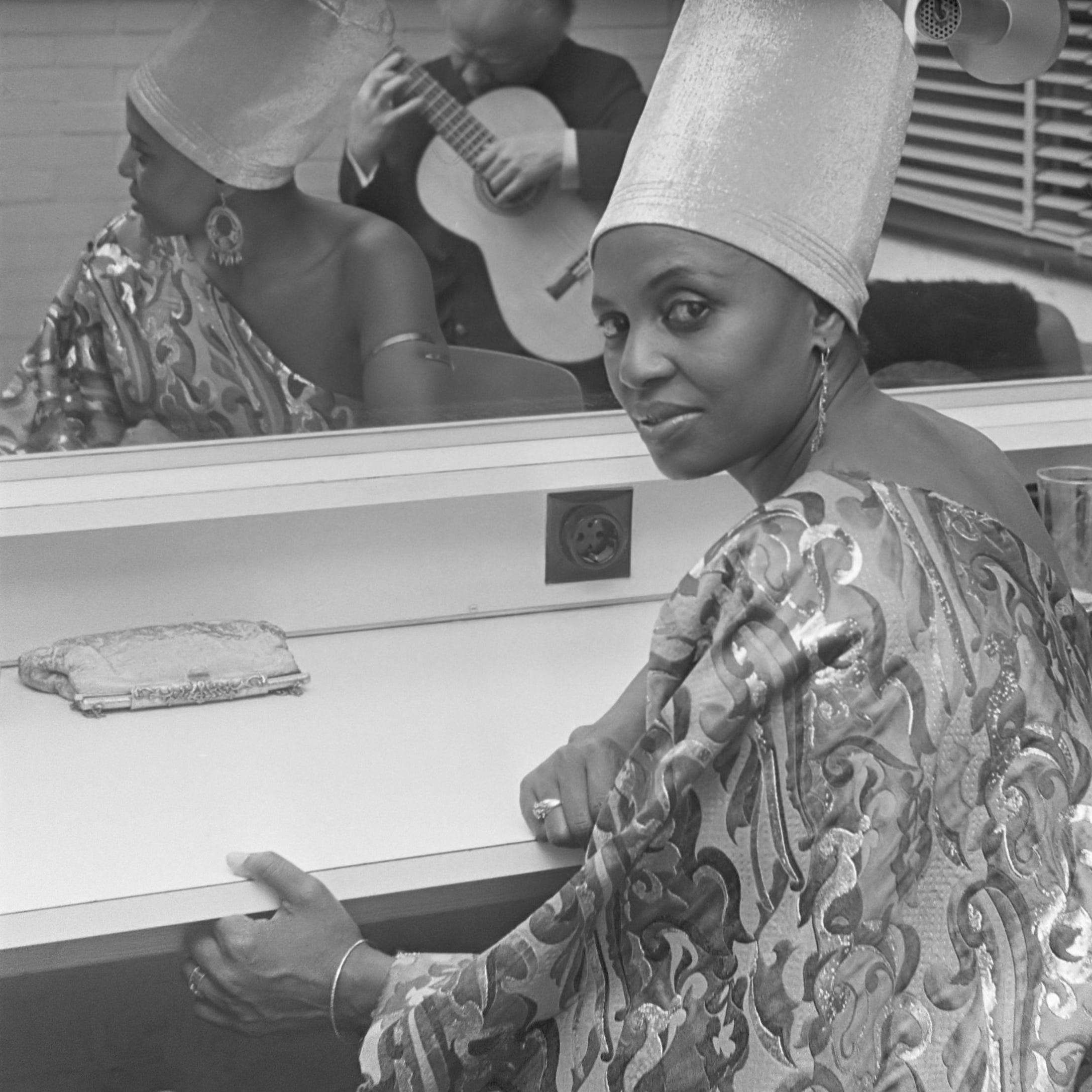
Mama Africa: Miriam Makeba in 1969. Image by Rob Mieremet, via Wikimedia Commons
The legendary Miriam Makeba, or Mama Africa as she was known, was a global celebrity who used her powerful voice to campaign against apartheid. A stance that led to a 30 year exile from her beloved homeland.
Makeba may not have described herself as a feminist. Feminism was not a formal movement when she came of age in mid-20th-century South Africa. Her politics were anti-apartheid, anti-colonial and Pan-African. But her life reads as profoundly feminist. She built an international career as a Black African woman in a male-dominated music industry. She used her platform to speak out against violence and injustice. And she exercised control over her voice and image, often at great personal cost.
Miriam “Zenzi” Makeba was born in a Johannesburg township on 4 March 1932. Her tradition name Zenzi is a Xhosa word - Uzenzile, meaning “you have no one to blame but yourself”. As a child, her family moved north to Transvaal and the early death of her father meant that she was forced to leave school to work to support the family. Apartheid was introduced in 1948, when Mariam was 16. A year later she married the first of five husbands and gave birth to her daughter Bongi - her only child.
The magic of her voice
Her magical voice was soon noticed. At the time, Black singers combined American jazz and ragtime with their church music, which led to a distinct harmonic style known as mbube. Makeba was one of its greatest exponents. Her big break came in 1954 when she joined the Manhattan Brothers, and later the Skylarks, an all-female group.
In 1957 she was recruited as a soloist in the African Jazz and Variety Review that toured Africa for 18 months, then she landed a small singing part in a film. She played herself in Come Back Africa, a dramatised documentary on apartheid directed by Lionel Rogosin. She sang only two songs, but her appearance changed her career and her life forever.
Rogosin invited her to attend a screening of the film at the 1959 Venice film festival, where she became an instant celebrity. She travelled to New York, where the singer Harry Belafonte took her under his wing and guided her through her first solo recordings with RCA.
Thirty years of exile
On 12 March 1960, South African police killed 69 peaceful protestors. The Sharpeville Massacre was a turning point in the struggle against apartheid struggle, putting it firmly on the world stage. Soon afterwards, Makeba’s mother died, but she found that her South African passport had been revoked for her political stance and so began her 30 years of exile.
As her obituary describes, her life in the US was to “unfold like a showbiz dream”. She even appeared with Marilyn Monroe at the famous birthday celebration for John F Kennedy. In 1966, she and Harry Belafonte won a Grammy for An Evening with Belafonte/Makeba, making her the first African woman to receive the award.
But she did not let her superstar career stop her campaigning. In 1963 she gave the first of several addresses to the UN special committee on apartheid. In response, the South African government banned her records.
She became increasingly involved with the civil right and Black Power movements and in 1969, married Black Panther leader Stokely Carmichael. The reaction in the United States was swift. Concert bookings evaporated. Television appearances were cancelled. Record labels distanced themselves. Makeba later said she was treated as politically radioactive overnight.
The couple left the United States, moving to the African Marxist state of Guinea, where President Ahmed Sékou Touré offered them asylum and official positions. Sékou Touré’s regime was authoritarian, marked by political repression and human rights abuses. Some have argued that her association with him amounted to complicity. Supporters counter that she was a guest in exile, dependent on protection, and focused primarily on the liberation of South Africa.
Makeba herself later acknowledged that Guinea was not perfect, but insisted that African unity and anti-colonial solidarity mattered more than ideological purity at a time when liberation movements were under constant threat.
In 1985, Makeba made her first appearance in Britian for 11 years. During her concert at London’s Royal Festival Hall, London she spoke of her sometimes controversial image.
She said: “People have accused me of being a racist, but I am just a person for justice and humanity. People say I sing politics, but what I sing is not politics, it is the truth. I’m going to go on singing, telling the truth.” In 1986 she won the Dag Hammarskjöld peace prize for her campaigning efforts
Her only daughter, Bongi Makeba, died in 1985 after childbirth complications, leaving Makeba to raise her grandchildren and prompting what Makeba later described as a kind of “spiritual madness”.
Returning to her homeland
When apartheid finally fell, with the release of Nelson Mandela from prison on 11 February 1990, Mama Africa finally returned home. A new generation of South Africans were not as familiar with her music as previous ones, and she struggled to make an impact in her homeland, but her international reputation was as strong as ever. During the 1990s and early 2000s she appeared a major festivals across the world, and was increasingly recognised as a major musical pioneer as well as one of the most recognisable voices of African resistance.
Despite “retiring’ in 2005 she continued touring, and 10 November 2008, she collapsed on stage in Naples at a concert supporting Roberto Saviano, the writer targeted by the Camorra mafia. She died later that night aged 76.
Her life was not perfect. It included compromise, controversy and ambiguity. She was also extraordinarily courageous and blessed with a glorious talent. And she died doing exactly what she had always done — using her voice in service of justice and freedom.
Watch Miriam Makeba performing one of her most famous songs Pata Pata on the Ed Sullivan Show, 1967.
Our right hand woman Lily Craven is taking a sabbatical from The Frontline. She sends her love to her many fans and hopes to be back soon. In the meantime, the editors will do their best to fill her shoes!

Navigate the public policy maze with the editors as they keep a watching eye on the issues affecting women

Pic by: akinbostanci via iStock
We are all busy, so it is hard to keep up with what people in power are up to - particularly in relation to policies and services that affect women and girls. We can’t offer a full monitoring service but in each edition we will highlight a few things to watch out for, and where you can find more information.
In Issue 17 we drew attention to three current petitions at Westminster. One calling on the UK government to appoint a maternity commissioner to improve maternity care has now reached 100,000 signatures, and will be considered for a debate in the House of Commons.
On Tuesday 3 February, the Scottish Parliament will hold its Stage 1 debate into Ash Regan MSP’s Unbuyable Bill and vote on whether it should go forward for further detailed consideration. The Stage 1 Committee report is here. The debate is currently expected to start sometime after 2pm and can be watched live on Scottish Parliament TV. Ash talked to us about her Bill in Issue 7.
Also on Tuesday 3 and Wednesday 4 February For Women Scotland are in court to challenge the Scottish Government’s policy of housing some male prisoners with women, under its policy for the management of transgender prisoners. MBM Policy have published a detailed timeline as background to the case.
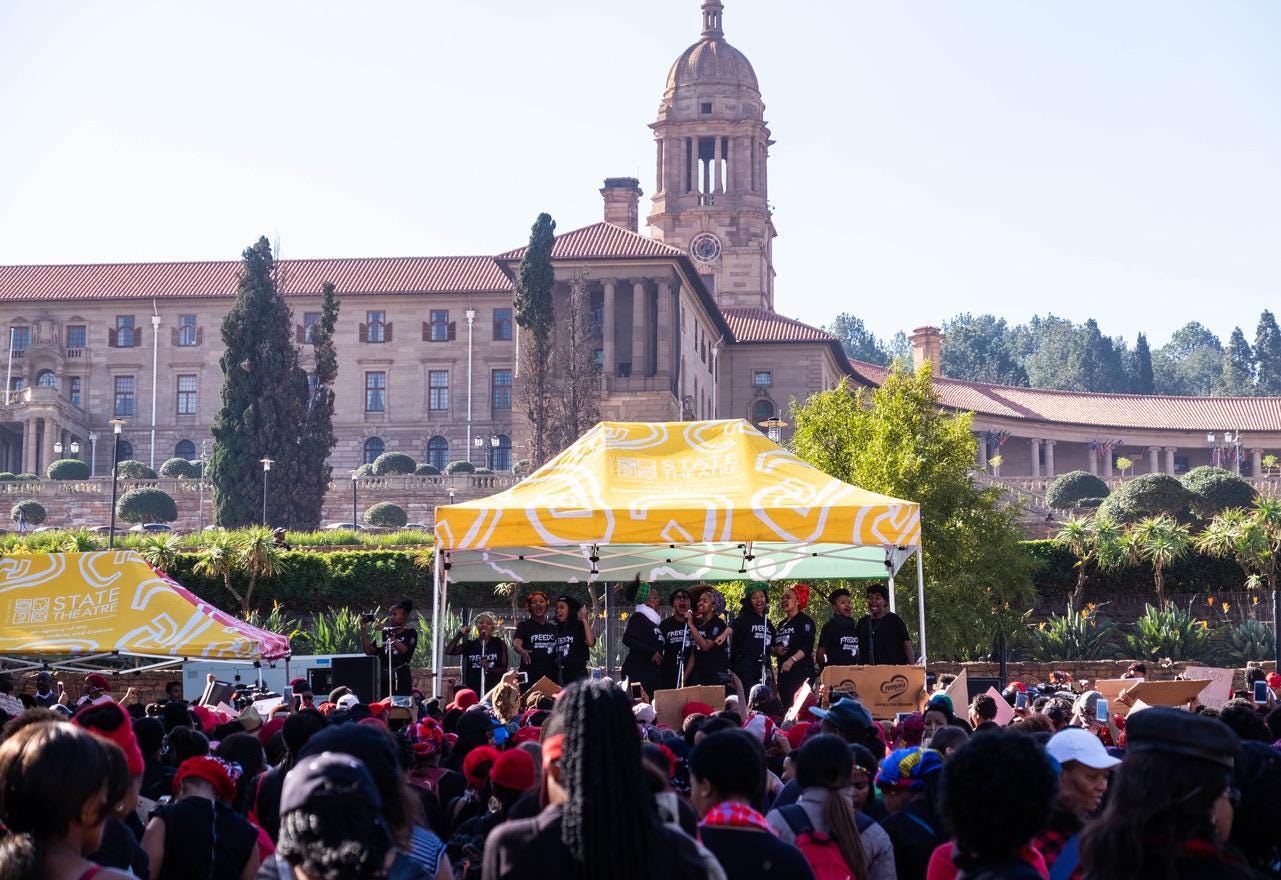
Women gather in support of a meeting with President Cyril Ramaphosa of South Africa. Image via Fezekile
Wherever you live in the UK, make sure you are registered to vote on Thursday 7 May
2026 is a big year for elections in the UK. There are around 5,000 council seats in England up for grabs, including in all 32 London boroughs. In Scotland, voters will decide who will run the Scottish Parliament for the next five years and in Wales the Senedd election will elect 96 members to the expanded Welsh Parliament.
It is less than 100 years since women secured their full right to vote on equal terms with men when the Equal Franchise Act was passed in July 1928, so make sure you are registered to vote in May, and if you need a postal vote, secure one now. Access all the information you need here.
There is still time to register, up to mid-April.
The UK Parliament Click here for future business
Northern Irish Assembly Click on ‘Business Diary’ for a week by week schedule
Scottish Parliament click on “Read today’s Business Bulletin”
Senedd Cymru | Welsh Parliament click on “View full calendar”