ISSUE 30: The Frontline
A 21st century feminist publication where women's voices have power
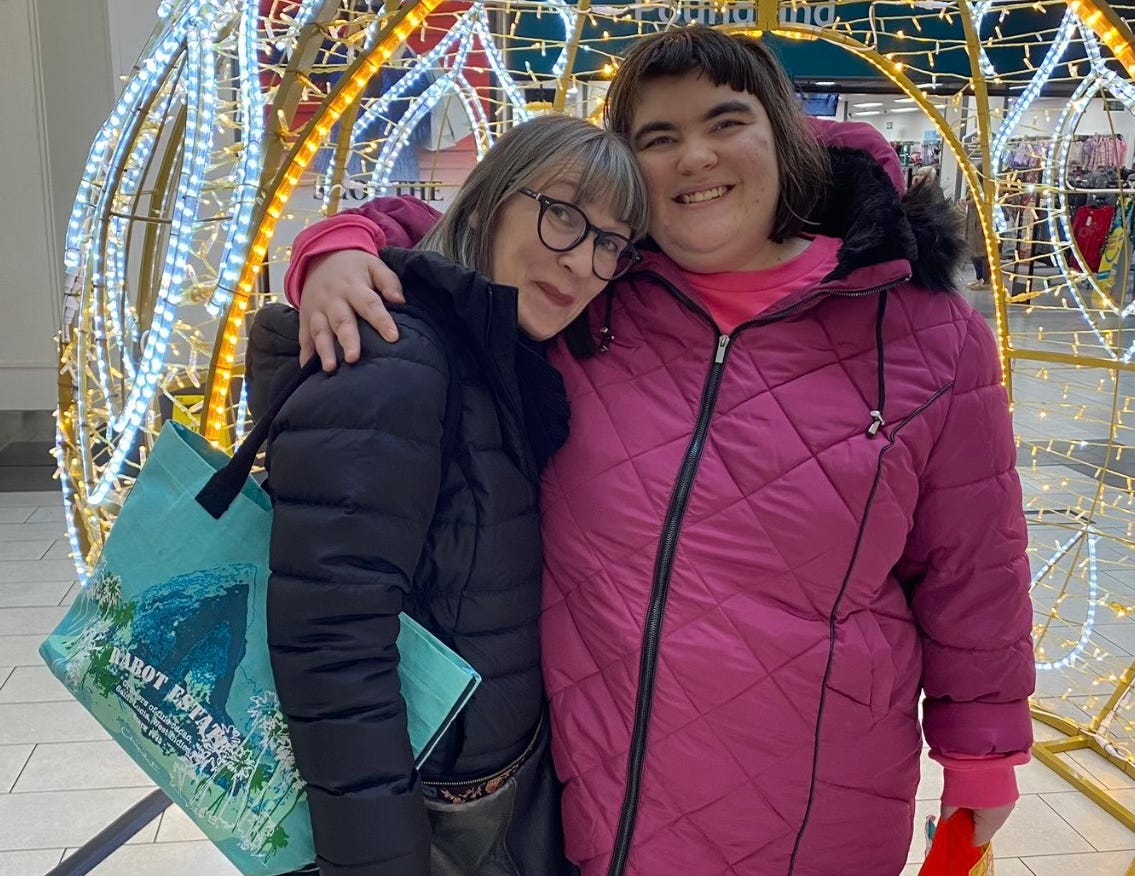
Nicky Clark and her daughter Emily enjoying a spot of Christmas shopping. Image contributed.
The themes of inclusion and exclusion run through this issue of The Frontline.
Weeks after the Ockenden Review produced its latest report, into serious failures in maternity services at the Nottingham University Hospitals NHS Trust, we hear from Nicky Clark. Her experience of giving birth in Shrewsbury in the 1990s were included in an earlier report by the review. Nicky tells a story deeply rooted in physical reality. From failures in delivery room, through mid-life medical crises, vulnerability and survival, love and loss, she reflects on her own life as a woman, and a mother, and that of her daughter. She argues for greater understanding of the resilience and courage it takes to survive as a learning-disabled adult in the UK in 2026, and shares the shockingly low life-expectancy of a “demographic who truly need representation in government, in culture and across our media.”
As a storm rages round Amnesty International UK’s attempt to make outcasts of dozen of grassroots groups set up to advocate for the rights of women, and of lesbians and gay men, The Frontline salutes a project after our own heart. Jo Phoenix tells us why she set up her own publishing company. Faced with the publishing industry’s determination to cold-shoulder her story, she decided enough was enough, and “to do the only thing I could: use my skills and know-how to make sure that our stories do not perish.” We look forward to reviewing Jo’s book, Sex: One Woman’s War in a future issue.
We stay with publishing, for a report from Gillian Phillip, on SEEN in Publishing’s latest report, on the what has gone wrong in children’s publishing. She describes a culture riddled with bullying and freezing out, that is not just failing children as readers, but actively exposing them to harm. Through the Looking Glass describes a problem years in the making, the seriousness of which publishers still show little sign of understanding. Gillian argues that financial and reputational damage on a grand scale lies ahead for the industry, unless, like Alice, they wake up soon.
The button at the end of this issue takes you to our subscriber chat. As ever, you can also find us in real time on X/Twitter, at @DalgetySusan and @LucyHunterB and our shared account @EthelWrites.
We are delighted that we can now plan for our fortnightly 21st century feminist publication to remain fully accessible. But we depend on some of our readers becoming paid subscribers so that we can pay our contributors, as well as keep the newsletter free so ALL women can access it. If you can afford a paid subscription, please consider getting one.


The agony of the waiting room never ends: From a traumatic birth to a cancer scare, this is what women’s lives really look like
By Nicky Clark
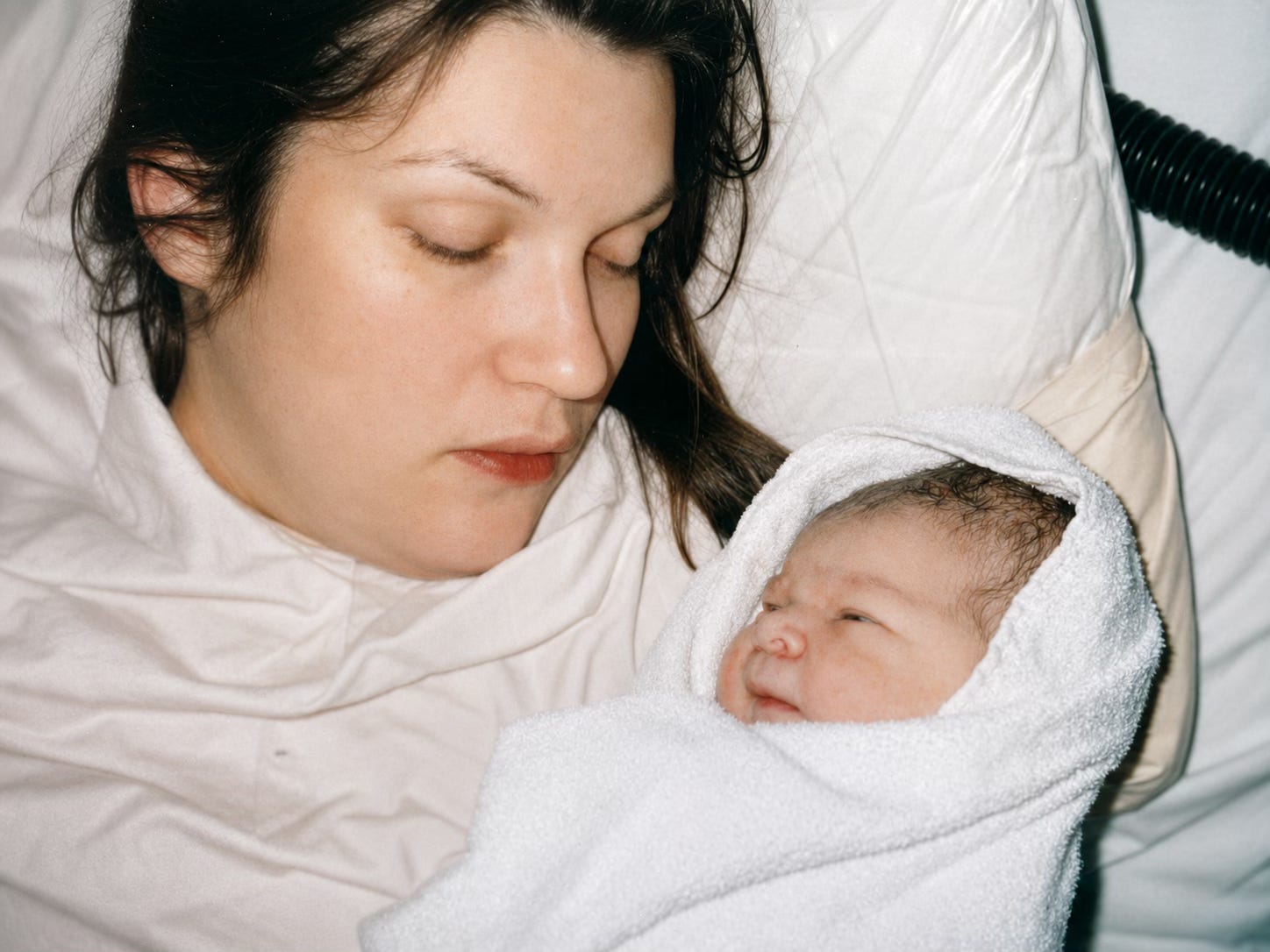
Nicky Clark and baby Emily, April 1997. Image contributed.
It’s Sunday morning in the suburbs and for the last 40 minutes I’ve been walking the aisles of the supermarket trying very hard to remember the list which I’d left on the kitchen table. My husband Phil and I are bleary-eyed and mostly on auto pilot.
I’m watching him load milk into the trolley when my phone rings. My first thought is Emily. My first thought is always Emily. That’s the reality of having a severely learning-disabled adult child, you don’t ever switch off the worry. So instantly I’m on high alert - is she ill? Did she have a bad night? Do I need to go over?
“Hello Nicola.” It’s my consultant. I’m so shocked I just turn and start walking quickly towards the main entrance whilst rambling apologies and saying how packed it is in the shop.
She continues, “I’m so sorry to disturb you, but I’m on holiday next week and I wanted to update you on your tests.”
A woman walks past me with her elderly mother, who I suppose must be deaf, as she’s shouting to her, “No mum, you have enough of that already. It’s in the freezer”
Fearing the reason why she’s phoning me a day earlier than arranged and on a Sunday, I sprint to the front of the supermarket so I can hear her.
As shoppers walk past, grabbing their trolleys and wrangling resisting toddlers into the child seats, my gynaecological oncologist explains the situation.
A realistic diagnosis and the waiting begins
I haven’t know her for long since I started on the two-week cancer pathway, but I like her very much. She’s compassionate, calm and direct. She tells me that the news is good, with a gentle caution which feels supportive and realistic.
The result from my blood test, which a week before had tripled, is called the Cancer Antigen (CA) 125 test and it’s widely used in ovarian cancer diagnosis and testing.
The good news is that it’s lower than it was a week ago and my ovarian tumour hasn’t increased in size, so she suggests a retest in a month rather than an immediate hysterectomy.
I burst into tears and thank her. She cautions again that if my numbers increase in a month then we’ll have to rethink and move quickly with surgery.
We say our goodbyes, then I remember my husband Phil.
He knows exactly who I’ve been speaking to, even though in my panic I forgot to tell him. He just watched me running to the doors of the shop to speak to the caller and knew if it had been about Emily I’d never have done that.
The language of love
That’s the story of a long marriage right there. It’s a language of love which understands that in moments of acute stress, the actions of your spouse don’t need the courtesy of words.
For seven months I’ve been waiting to know if I have cancer, and as any one in my situation will tell you, this waiting becomes an exhausting struggle of fear.
When I had my heart attack and two heart surgeries last year, I was hoping for a bit of a break between health issues. My reproductive organs had other ideas.
When you have two children who, despite being 29 and 32, still need you very much because they’re disabled and you’re their parent, carer and advocate, the picture becomes even more complex.
Ockenden review of maternity services
When I explain that both of our children were born at The Royal Shrewsbury Hospital in the 1990s, that may start to add crucial detail.
It was a time of “What’s best for baby”, a hollow mantra now in light of the Ockenden Review, of which we were a part.
In an age when Victoria Beckham was deemed a villain and labelled too “posh to push”, elsewhere problems were occurring on maternity wards and delivery rooms, the results of which didn’t always manifest straight away. It’s funny how that works out for women isn’t it?
For Phil and I, and our beautiful youngest daughter Emily, the life changing consequences of problems in the second stage of my labour only became apparent when, just before her non-verbal third birthday, we were told she was severely learning disabled.
Her diagnosis of autism and epilepsy would follow a few days later. Everything bad followed later.
If only people understood the resilience and courage it takes to survive as a learning-disabled adult in the UK in 2026. The life expectancy of learning-disabled for men and women is 22 and 26 less respectively, with thousands of avoidable deaths every year from routine causes such as constipation.
This is the demographic who truly need representation in government, in culture and across our media, but there I go, being unrealistic again.
The lessons life teaches women
The reality of life for thousands of learning-disabled people just like Emily is that they’re injured from cradle to grave.
As the scale of the crisis in maternity services becomes apparent, women are learning that medical misogyny continues to damage far too many lives.
We learn it at the school gates when the other mothers embrace the populist myth that our children in the classroom will affect their child’s education. We learn it when the invites from our social network start to dry up.
We learn it when politicians, so keen on the wheelchair photo-op, seem to forget their empathy when they warn of the perils of mythical SEND entitlement in schools and warn of fake ‘lives of luxury on benefits’ in adulthood.
And when we’re finally at an age when our experience meets our self-confidence and we can at last share what we know to help other women navigating the world, society tell us we’re too old for anyone to care.
And also would we mind f**king off as they’re a bit busy at the moment writing a tearful piece about how magnificent Harrison Ford is in his eighties.
I live a small life. I know it. I’m not famous, and as we know this is the only currency which matters these days.
I watched the Princess of Wales recently complete her Three Peaks challenge to raise money for the Royal Marsden Hospital where she had her cancer treatment.
This young woman who we’re more used to seeing in diamond tiaras was showing us that there is hope after diagnosis and life after major abdominal surgery.
But the thing that moved me most was the tiny braided bracelet she wore on her wrist, made for her by her daughter, Charlotte.
The fragility, the complexity and the strength of the love we carry as women and as mothers isn’t easy to explain. When our children come to us, they don’t arrive with a rulebook or a money back guarantee.
The mothers of Ockenden and elsewhere, who are carrying livelong loss, lifelong caring duties or midlife illness, deserve to be seen through the prism of a whole life. When we want and need to trust our local hospitals again, as I do now, will we be able to?
Nicky Clark is a freelance journalist, screenwriter & equality campaigner.
They wouldn’t publish my book, so I founded my own publishing house to make sure women’s voices could never be silenced again
By Jo Phoenix
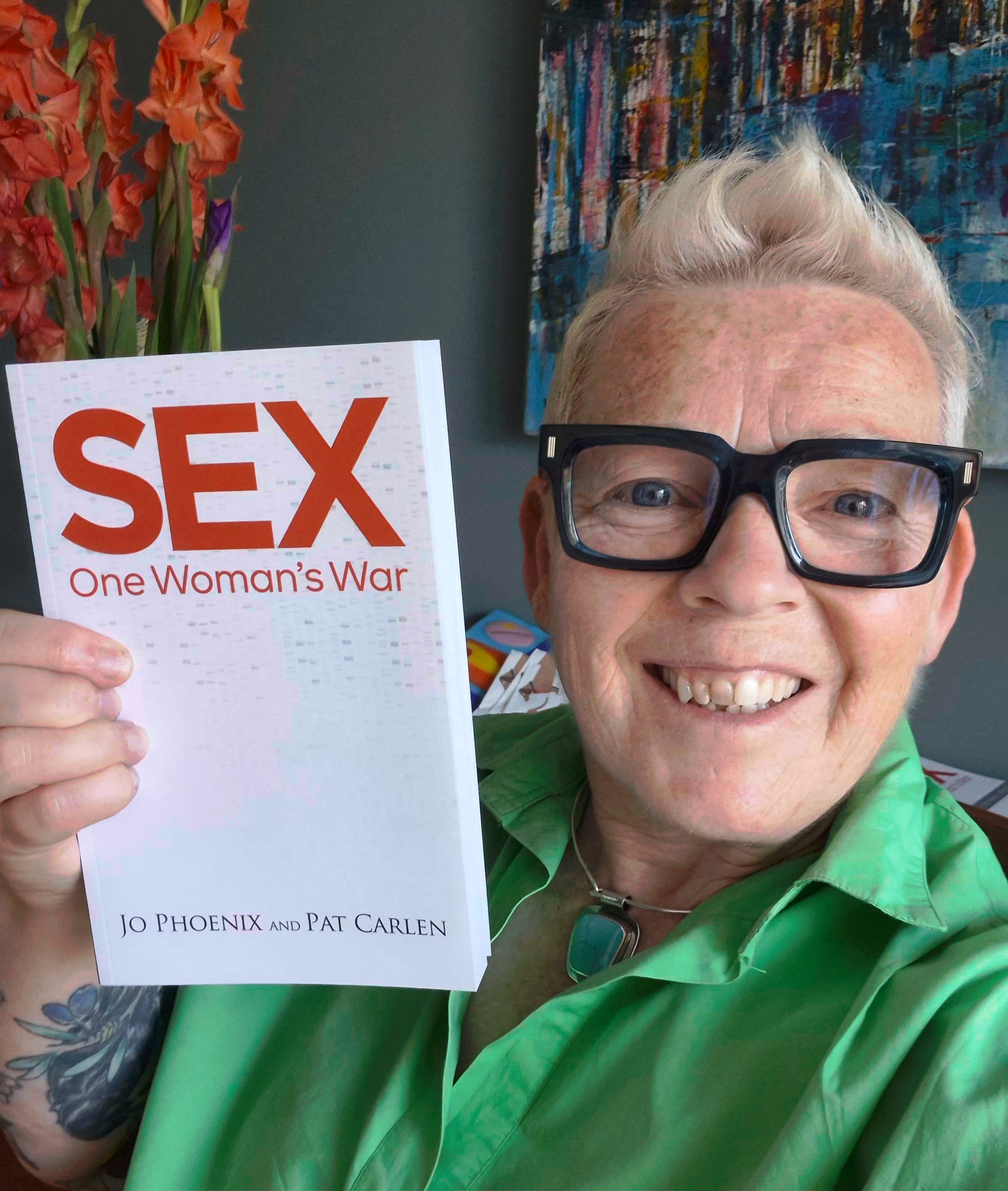
Jo Phoenix and her new book, Sex: One Woman’s War. Image contributed.
It started with a refusal from Routledge. Pat Carlen and I were nearly finished writing a book – part memoir, part sociological account of why I decided to sue the Open University – and were looking for a publisher. Both of us are very seasoned authors who had never encountered any problems getting book proposals accepted by publishing companies. Between us we have hundreds of published articles and book chapters and dozens of published books.
We had recently published with Routledge and, at the time, Pat and her co-editor were working with Routledge on the second edition of an edited collection in which I have two chapters. So it was only natural to send them the proposal. The proposal was sent out to four reviewers, as is the normal practice. The reviews came back very positive and the commissioning editor sent us a contract saying that ‘subject to contract’ they wished to publish the book. We looked at the contract and suggested a few tiny amendments on 15 June 2025. So far, so utterly normal.
Publisher feared social media backlash
Nine days later, on 24 June, the commissioning editor replied to my queries about the contract and said this: “Given the potential for controversy with this title, it has gone to our Editorial Director for approval. I have been chasing for an answer.” I was confused – we had received a contract to sign a few weeks earlier. I asked what he meant and the answer came back: “From what I understand, while there is no problem with the book itself, senior management have concerns about Routledge’s capacity to manage potential social media backlash.”
And there it was again. The long shadow cast over my career – now extending to my co-author – of the targeted harassment campaign perpetrated by my former colleagues and peers.
Eventually, Routledge settled on the following as the reason for pulling the contract offered: “Unfortunately, the board have decided they’re unable to make you an offer of contract as they do not feel that Routledge is the best publisher for your new project. The editorial board appreciated the supportive comments we received, and that the reviewers recognised the book’s contribution to the field.
“However, they are concerned that the autobiographical, trade-oriented approach would require a dedicated marketing campaign, including a tailored social media strategy, to ensure success. As an academic publisher, we don’t have the resources for this and the board are concerned we wouldn’t be able to reach a wide enough market. Please be assured that the decision is no reflection of the quality of your writing and is based on our capacity to engage with your intended audience in order to make the project financially viable.” It is worth noting at this point that Routledge is an imprint of Taylor and Francis, whose annual revenue last year was nearly £620 million.
Only the first refusal
As it turned out, this was not to be the only refusal to publish our book by an academic publishing company that still profits from our back catalogues. For instance, Bristol Policy Press did not even send the proposal out for review. Instead, we received a warm, careful, evasive perhaps, email. They appreciated “the personal and professional experiences that inform your work” and called the themes “valuable and timely.” But: “This decision is based on the practical and financial implications associated with publishing material that will likely require significant resourcing, including potential legal or sensitivity checks.” They insisted the decision was “no reflection on the quality of your manuscript.” I still do not understand why this book would require ‘significant resourcing’ – or at least any more resourcing than any other book they publish.
Others stated that they do not publish memoirs or only publish memoirs for very famous people. I sort of get it but I remain unconvinced. In 2025, Sex Matters and SEEN in Publishing produced Everyday Cancellation, which found gender-critical books substantially outsell titles built on gender-identity ideology — the average gender-critical title selling roughly nine times as many copies in comparable categories. This is all by way of saying that an academic publisher citing commercial caution while turning away established authors with a demonstrated audience is not making a straightforward commercial calculation, and I knew it.
Not a unique experience
Nor are these experiences unique to Pat and me. It is documented, systemic, and ongoing. In addition to Everyday Cancellation, there is also the report I co-authored (entitled The New Boycott) with Denise Fahmy and Rosie Kay from Freedom in the Arts. That report documents how no-platforming, institutional pressure and reputational attack against people with gender-critical views have migrated off social media and universities into the arts and cultural sector – including publishers.
Both reports evidence quiet cancellation of gender-critical authors and writers – the cumulation of decisions that sound, on the surface, logical and unremarkable but together ensure certain voices never reach readers. The women most affected are rarely tenured academics; they are the ones who lost jobs and careers, whose testimony about fighting for sex-based rights cannot find a publisher and so goes missing from the archive. In my work as an academic, I have spent 30 years arguing that the silencing of women is never politically neutral, and I was not going to watch it happen to the record of my generation’s most significant struggle for women’s rights and do nothing.
The birth of Phoenix Publications
So I founded Phoenix Publications Ltd with the remnants of money left to me by my father. I bought the software I needed and had a lot of help from many people to bring the company to life and to get Pat’s and my book published. I knew from the Crowdjustice support for my case against the Open University that social media has huge capacity to reach an interested gender-critical audience from across the globe – ironically probably a larger audience than academic publishing companies tend to reach.
So far, two weeks since launching Sex: One Woman’s War, I think my gut instincts were about right. The first small-batch print run sold out in two weeks. Today, I have just taken delivery of a bigger print run.
Phoenix Publications Ltd is not a vanity project. Whilst it started with Pat’s and my book, what I realised in the process of getting turned down by so many publishers is that I was not willing to let a captured industry decide what gets said, by whom, and what survives. Phoenix Publications Ltd is a beginning: a small press, currently run on a shoestring, which will publish work that larger publishing companies judge too risky to touch. My motivation is simple: I am doing this so women’s voices in this struggle are not lost from the historical archive. Women’s testimony about a pivotal political moment is not something I am willing to let go unrecorded, so I decided to do the only thing I could: use my skills and know-how to make sure that our stories do not perish.
To find out more about Phoenix Publications Ltd, and to purchase Sex: One Woman’s War at a discounted price, please visit the website: https://www.phoenixpublicationsltd.co.uk/
Jo Phoenix is founder and Director of Phoenix Publications Ltd. She is also Professor of Criminology at the University of Reading's School of Law. Over a research career spanning 30 years, her work has focused on sex, gender, and the criminal justice system as well as youth justice. She is perhaps now best known beyond the academy for her landmark employment tribunal against the Open University.
Shattering the Looking Glass: A book industry report sets alarms ringing; publishers ignore the smell of smoke
By Gillian Philip
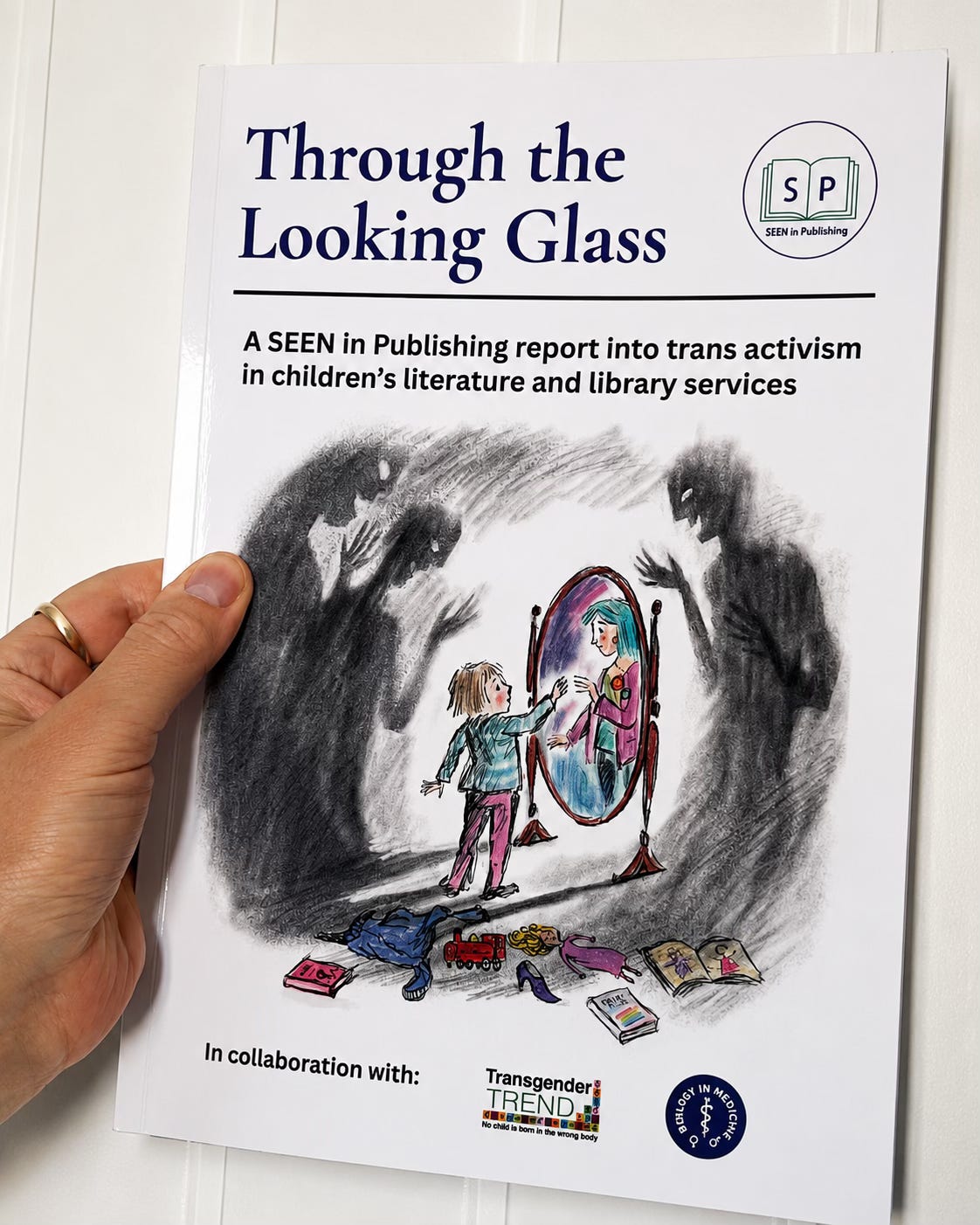
Through the Looking Glass. Image contributed.
It’s been eight months since the Labour government announced they were going forward with the puberty blockers trial: in other words, that they were happy to permit dangerous experiments on children too young to give meaningful consent. Wes Streeting had promised to put the barbaric proposition on indefinite hold, but Wes was suddenly caught up in the excitement of a leadership race that wasn’t actually happening. That meant his tenure as Health Secretary would have to take second place to ambition, and that we’d be saddled with the feebly ideological James Murray in his place. And thus was the trial defibrillated back to life.
Wake-up call
It was an ear-splitting wake-up call to those who had announced that the battle is all over bar the shouting. Trans ideology is thickly embedded in government, in universities, and in state institutions from the Army to the police to our schools; and it isn’t time to relax. Premature assumptions of victory are what let this slip back under the door like that grotesque spider you didn’t have the heart to squash.
Here’s the thing: those of us involved with the publishing industry knew all this. Even in the sunniest of days after the Supreme Court ruling won by For Women Scotland, we realised the fight for the soul and purpose of publishing had barely begun. Children’s publishing especially was captured many years ago by activists, and the ideology’s stranglehold is as stubborn and malevolent as Japanese knotweed. That’s why SEEN in Publishing was founded, to fight for sanity in the industry; and their latest report, launched on 17 June in the House of Lords, is a sobering if not terrifying read.
Children’s publishing and trans propaganda
There’s a direct connection here to the depraved puberty blockers trial. Children’s publishing has been instrumental in the tide of trans propaganda choking schools and libraries. The authors of Through the Looking Glass — I was one of them — read volumes and volumes of character-free spreadsheet slop (spare a thought for our dismal lost hours), and the report’s conclusions are damning.
Woven through the books are poisonous lies, historical distortions, blatant homophobia, and outright celebrations of kink; the atrocious writing is almost a secondary issue, were it not that reading for pleasure is in steep decline among children, and this stuff isn’t helping. There used to be such a thing as quality control, both in commissioning and in the editorial process, but as the report makes clear, the adults capitulated early to their rabidly biased junior staff.
‘Trans’ books show mostly poor sales figures, but they do have an impact on the children who are urged by teachers and librarians to read them. That’s where much of the demand comes from – encouraged of course by avaricious doctors, Munchausen parents and adult male transvestites in search of validation – for a puberty blockers trial that will destroy the brain development, bone growth and fertility of participants as young as 11. It is not simply the business model of children’s publishing that is at risk here. There are legal implications that publishers will not be able to dodge when the maimed and damaged chickens come home to roost.
Through The Looking Glass is extremely clear on the gamble that companies are taking with their own futures as well as children’s. It features analyses not just from publishing figures, but from medical professionals including a consultant clinical psychologist, a highly experienced GP and – take note, publishing houses – a doctor who is an expert in Medical Ethics and Law.
One can’t help thinking that the publishing world, together with its whole ecosystem of agents, festivals, prize lists and library services, fully deserve what will inevitably happen. It’s not as if the industry wasn’t warned early. The treatment of authors who raised the alarm has been unforgivable, and many such incidents are detailed in the pages of Through The Looking Glass. The industry’s history with the cancellations of authors and agents has been one of panic, cowardice and outright stupidity, but there’s a second-line culture that is even more malignant: the fellow authors who initiate and join the mobs.
Bullying a central theme
The theme of bullying is a much-ploughed field in children’s fiction. We all remember the stories of our own childhoods, when a book’s protagonist would have to deal with mean kids at high school or in the princess’s palace, in the football team or in the wizard’s castle. The triumph of the plucky hero would be thrilling and satisfying, and we’d cheer their happy ending. Even now, bullies are a big feature of the by-numbers books that rejoice in the severing of girls’ healthy breasts, or the homophobic love story of a girl who wins a gay man (oh, that book — I have never read such a blatant celebration of conversion therapy). Yet in breathtaking irony, bullying by children’s authors themselves is savage, born less of sincere belief than of spite and malignant jealousy. You wouldn’t want them writing an ABC of zoo animals for your young children, yet they wield huge destructive power over other authors’ lives — for instance, the brutal incineration of Rachel Rooney’s career.
No wonder publishers capitulate to these monstrous people. But senior executives need to grow spines, and quickly. This report isn’t timely, exactly; it’s been needed for at least a decade. Now that it’s available, publishers need to read it, and they need to take it with deadly seriousness.
The puberty blockers trial is going to have appallingly destructive ramifications. The price will be astronomical in terms of destroyed lives, but also in reputational and financial damage for those who fed the demand with lies, distortions and a twisted ideology.
Read it and weep, publishers. And then do something.
Gillian Philip is a former children’s author who was fired by her agent and publishers in 2020 following a mobbing on Twitter by trolls. She worked in the haulage industry for five years but has now returned to writing articles, commentary and a forthcoming novel. She lives in the north of Scotland.

Navigate the public policy maze with the editors as they keep a watching eye on the issues affecting women

Pic by: akinbostanci via iStock
We are all busy, so it is hard to keep up with what people in power are up to - particularly in relation to policies and services that affect women and girls. We can’t offer a full monitoring service, but in each edition we will highlight a few things to watch out for, and where you can find more information.
Westminster is now in recess until after Monday, 31 August. However, on Monday 20 July, we will have a new Prime Minister when Andy Burnham takes over from Sir Keir Starmer. What can women expect from the former Mayor of Greater Manchester who, until now, has been equivocal in his support for women’s rights?
In 2022, at a meeting of Greater Manchester’s Youth Combined Authority, Burnham was asked whether trans-identifying males should be able to use women’s toilets.
He replied: “Clearly there is a group of people who do feel that toilets should be a safe space only for women and there should not be anyone biologically a male allowed in that space.” He continued: “I don’t think that’s a majority view. I think it’s a minority view and quite a small minority view, actually.”
His position has shifted since. Recently he said on the Supreme Court’s For Women Scotland and EHRC’s updated code: “Let’s implement the guidance, but do it in the fairest and most compassionate way possible.”
The EHRC code takes formal effect on 5 August. Access it here.

UK Parliament: is now in recess until the start of September
Northern Irish Assembly: is now in recess until the start of September
Scottish Parliament is now in recess until the start of September
Senedd Cymru | Welsh Parliament is now in recess until 13 September

All content is protected: articles may not be reproduced without permission from the authors or this newsletter. For any reuse requests, please contact us in the first instance.