ISSUE 27: The Frontline
A 21st century feminist publication where women's voices have power
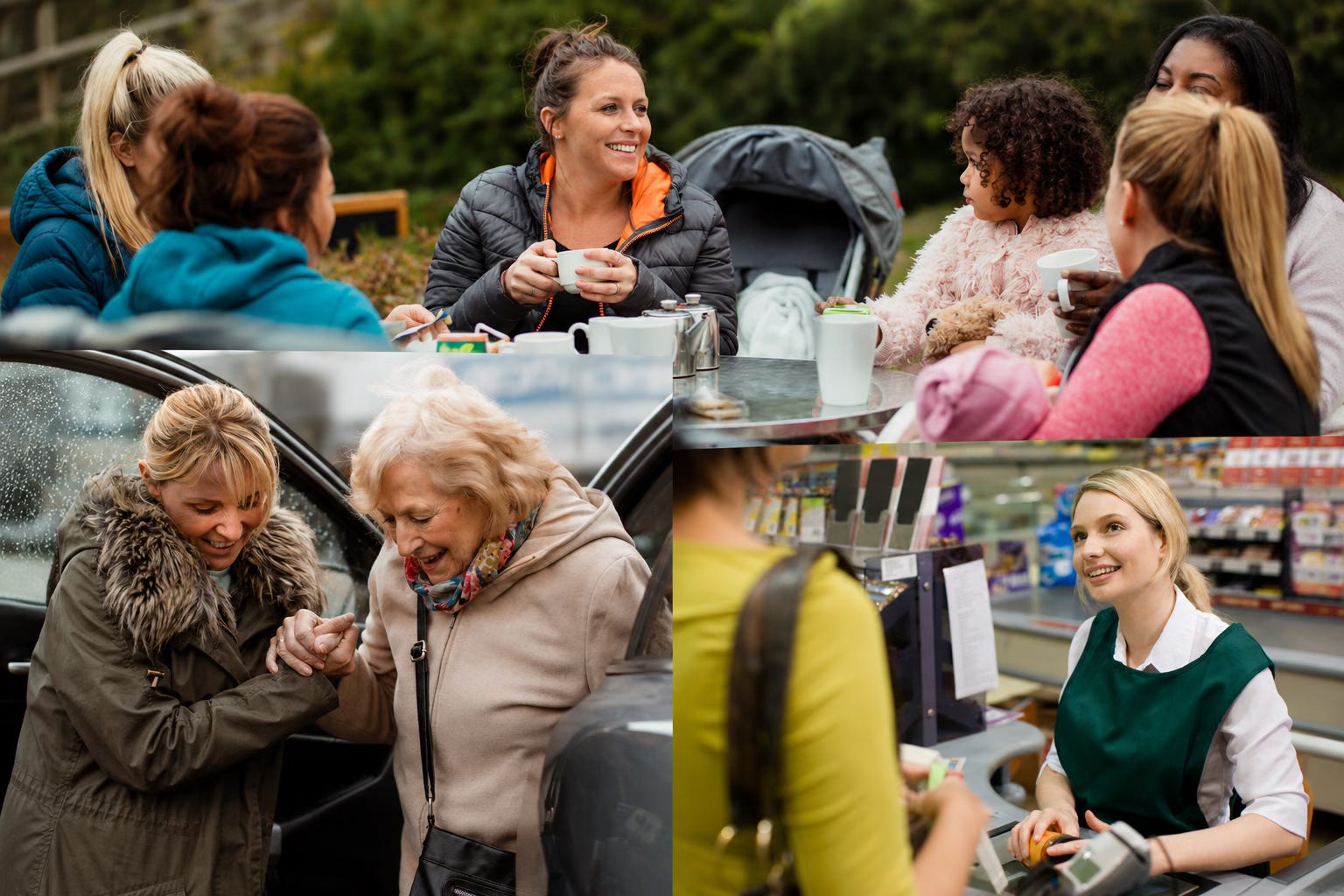
The stories of working class women are still largely unheard. Pics via iStock

In this issue, we look at the impact of social class on women and girls. Class continues to shape a girl’s chances in life, affecting her education, earnings, health, housing, and even her political influence.
Women working in areas vital to all our lives, such as social care and retail have low pay with little career progression. One of the biggest economic and social divides in the UK today is between women who graduate from university, and those who don’t. Women from poor backgrounds experience poorer physical health, higher rates of chronic illness and a shorter healthy life expectancy.
And working class women remain under-represented in politics, senior media roles and public appointments. And class is not just about income, far from it. It is about a woman’s accent, her self confidence and her expectations for herself and her family. It is about her networks, and her access to power. It is about cultural capital as much as it is about money in the bank.
But, as Dr Lisa McKenzie argues, is society is looking at social class the wrong way? She suggests the discussion should be what working class women give to society, not what they lack. A view echoed by former councillor and women’s rights campaigner Caroline McAllister, who reminds us how the Covid-19 pandemic showed us that the people who kept the country running while the rest of the population stayed at home on their laptops, worked in jobs largely regarded as working class, such as social care, transport and childcare.
Caroline recently found herself in the middle of one of the biggest political scandals of recent years where Nicola Sturgeon’s husband admitted stealing more than £400,000 from party funds while he was chief executive and his wife was leader. Caroline, a former SNP national women’s convenor, was one of the courageous members of the party’s national executive committee who were forced to quit in 2021, after asking questions about the SNP’s financial management. She first wrote about her experience inside the party in The Women Who Wouldn’t Wheesht, published two years ago this week. You can listen to her recent interview on LBC here, and her longer interview for the Unsilenced Project here.
This issue also brings you another Frontline Briefing, this time on what is going on with the revised EHRC Code of Practice currently before the UK parliament. In Policy and Power we highlight signs of renewed lobbying at Westminster to make it easier for anyone over 18 to obtain a baby through a surrogacy arrangement.
The button at the end of this issue takes you to our subscriber chat. As ever, you can also find us in real time on X/Twitter, at @DalgetySusan and @LucyHunterB and our shared account @EthelWrites.
We are delighted that we can now plan for our fortnightly 21st century feminist publication to remain fully accessible. But we depend on some of our readers becoming paid subscribers so that we can pay our contributors, as well as keep the newsletter free so ALL women can access it. If you can afford a paid subscription, please consider getting one.


The story hasn’t changed since 1984 - forty years on, we’re still blaming working-class girls for failures that aren’t theirs
By Dr Lisa McKenzie

Dr Lisa McKenzie
In the last month I have been invited onto several media panels to discuss the supposed failure of white working-class young people to gain qualifications and find secure work. BBC Radio 4’s File on 4 reported that white working-class girls are more likely to miss school because of caring responsibilities, but also because many do not believe education or further study will improve their lives. Since 2019, the number of low-income white British girls passing GCSE English and maths has fallen by 6.4 percentage points, with only 38% achieving grade 4 or above in 2025.
Channel 4 News also invited me onto a panel about a new report asking why white working-class young people are falling behind in education and employment. Both programmes leaned on a familiar explanation: a culture of suspicion in working-class communities, an antagonism towards education, a failure to aspire. Channel 4 and the BBC both interviewed white working-class girls in deindustrialised communities in Hull and Grimsby about school, university, work, and their futures. What these girls described was not a failure of ambition but a clear-eyed understanding of the world available to them. They spoke about adult responsibilities in the home, about never knowing anyone who had gone to university, and about choosing work and motherhood over school. They understood their lives as rooted first in community, not in the hollow language of aspiration often imposed by policymakers and broadcasters.
Listening to them took me straight back to 1984, to my own understanding of the adult world as I left school in Sutton-in-Ashfield in Nottinghamshire. More than 40 years later, the script is painfully familiar. I did not need Channel 4 or BBC Radio 4 to explain it to me. I still live in what is now an ex-mining community in Nottinghamshire and, in truth, very little has changed for working-class women and girls.
The future we thought was waiting for us
I left school in 1984. I was 16, and by my final year I had stopped going in any meaningful sense. I would rather have been in the park, even in the freezing cold, than sitting in a classroom. I had given up on school, and school had given up on me. In the early 1980s schools were still rigidly streamed by what they tested as ability, and I had been placed in the top set, the pupils entered for what were then O Levels. My friends from the council estate, the girls I had gone to primary school with and grown up alongside, were in the lower sets. Some were entered for CSEs; some were made to do gardening or clear snow in winter so the teachers could get their cars out of the car park. I used to look out of the window and feel jealous watching my friends laughing outside while I sat through English O Level.
But none of it really mattered, we all knew where we were heading: into the factory. School felt patronising and dull, and I could not see the point of it. I already knew the kind of future waiting for me, and I was glad to leave. I wanted to work and to earn money. When my dad went out on strike in March 1984 as a Nottinghamshire coal miner, I was only a few months away from leaving school. When my mum said, “Don’t bother going back — come and help me set up Ashfield Women Against Pit Closures”, I was relieved. Even waking early to make breakfasts for returning pickets and for younger children before they went to school in the strike centre felt more meaningful than anything school had offered.
Finding education later
That was 42 years ago. After years working in the factory alongside my mum, making tights at Pretty Polly, she died in a car accident in 1999. She was only 50, and when your mum dies something shifts in you. Your connection to the women who came before you can feel broken. I felt broken and adrift. I found myself on an Access to Social Work course at a local further education college. I thought social work might be a way of giving something back to the community I felt I owed much to. I had learned over the years as a mother and still living on a council estate that working class women leaned on each other.
Working-class women rely on family, friends and community to raise children with very little money, all while living under constant scrutiny from schools, GPs, health visitors, housing officers, and social services. So we rally together. We share stories and warnings. We teach each other how to deal with the state. In the end I did not become a social worker. I left the Access course and went to the University of Nottingham to study sociology as an undergraduate. It was there that I realised I did not want to become part of the state; I wanted to critique it.
The ‘wrong’ kind of working class academic
I stayed at the University of Nottingham, secured funding for a master’s degree and then a PhD. What I wanted, and still want, is to tell the story of working-class women like me — my mum, my cousins, my friends. It has been 16 years since I was awarded my doctorate, and I have never really been welcomed by academia. I have always been the wrong kind of working-class woman: not one of the acceptable ones, not one of the grateful ones, not one willing to assimilate.
The stories we pass on
Hearing working-class girls today say the same things I said more than 40 years ago reminded me that the connection I thought I had lost was never gone. It lives in the stories we tell, in the strategies we pass on, and in the lessons working-class women teach each other about survival. The struggles facing girls now are not new. They are the continuation of the same material inequalities, the same stigma, and the same class contempt that shaped the lives of the women before them. The problem has never been that working-class girls lack ambition. The problem is that public discussion about them is still organised around what they lack — around what they supposedly do not have — rather than around what working-class women do give, build, and hold together.
Lisa McKenzie is a British sociologist, writer, and working-class academic whose work focuses on class inequality, deindustrialisation, social justice, and working-class culture in Britain. She studied at the University of Nottingham, where she completed degrees in sociology, social policy, and research methods before earning a PhD in sociology. Her research has centred on the lived experience of working-class communities, particularly council estates and the long-term effects of austerity and economic change.
Read about Sixteen here and watch this BBC news item.
What politics taught me about class and women’s rights and why ordinary people are too often ignored by those with power
By Caroline McAllister
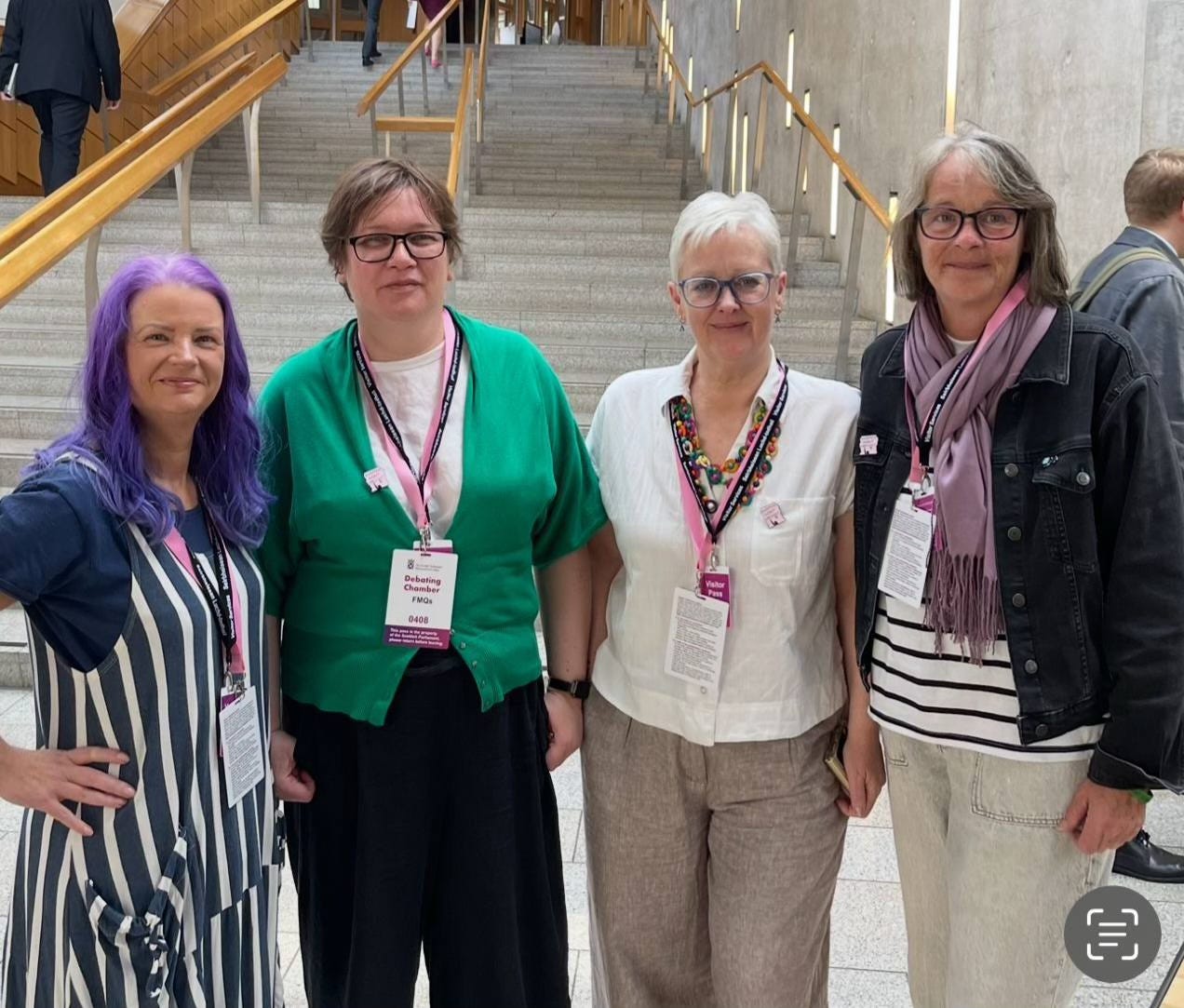
Caroline McAllister (right) with the Women Won’t Wheehst team during a recent visit to the Scottish Parliament. Pic via Women Won't Wheesht
The definition of social class is a debate I have had many times. How it defines, shapes, and influences me has changed over the years, but it remains a constant reminder of who I am and where I come from, despite being told I am now middle class.
When I entered politics in my local area as a councillor, an area steeped in the legacy of heavy industry and now a shadow of its former self following deindustrialisation, ‘working class’ was not, for me and the people I represented, a novel concept to be patronisingly discussed by the lanyard class over their mocha lattes.
It is not just an identity; it is a culture with its own moral code: hard work, straight talk, mutual aid, and earned respect. As councillor, I related to the people I represented, and their struggle to be heard and seen in any meaningful way. But there are far too few working class politicians, meaning that decisions are taken by people who neither recognise nor understand that moral code, nor the lives of ordinary people.
Prejudices affect policy
I recall one education committee meeting where there was a discussion about how best to ensure children were fed during term breaks. A popular proposal was to issue cards to families that could only be used to buy food items from a specific shop.
I raised concerns about this suggestion as I felt that it made negative assumptions about parents. Thankfully the idea was scrapped, as there was no evidence to support the inbuilt prejudices that had produced such an insulting proposal.
One particular comment made at the committee convinced me that class still mattered, particularly in politics, when a councillor suggested that people could not be badly off because lots of children had iPhones. It was beyond their experience to understand that parents went without so their children did not.
The same prejudices exist at a national level, with the Scottish government cutting council budgets, forcing them to reduce services that offer people opportunities to improve their life. Yet government ministers boast about introducing benefits for low earners. These benefits rarely make much impact, while evidence suggests that opportunities in education, training and employment are what actually change lives for the better.
Representation without understanding
We talk a lot about representation, yet decision-makers tend to come from the middle or upper classes. That is not to say they are incapable of understanding social class. However, long-term investment in people rarely grabs positive headlines, and in this age of politics by selfies and spin, headlines are what matter most.
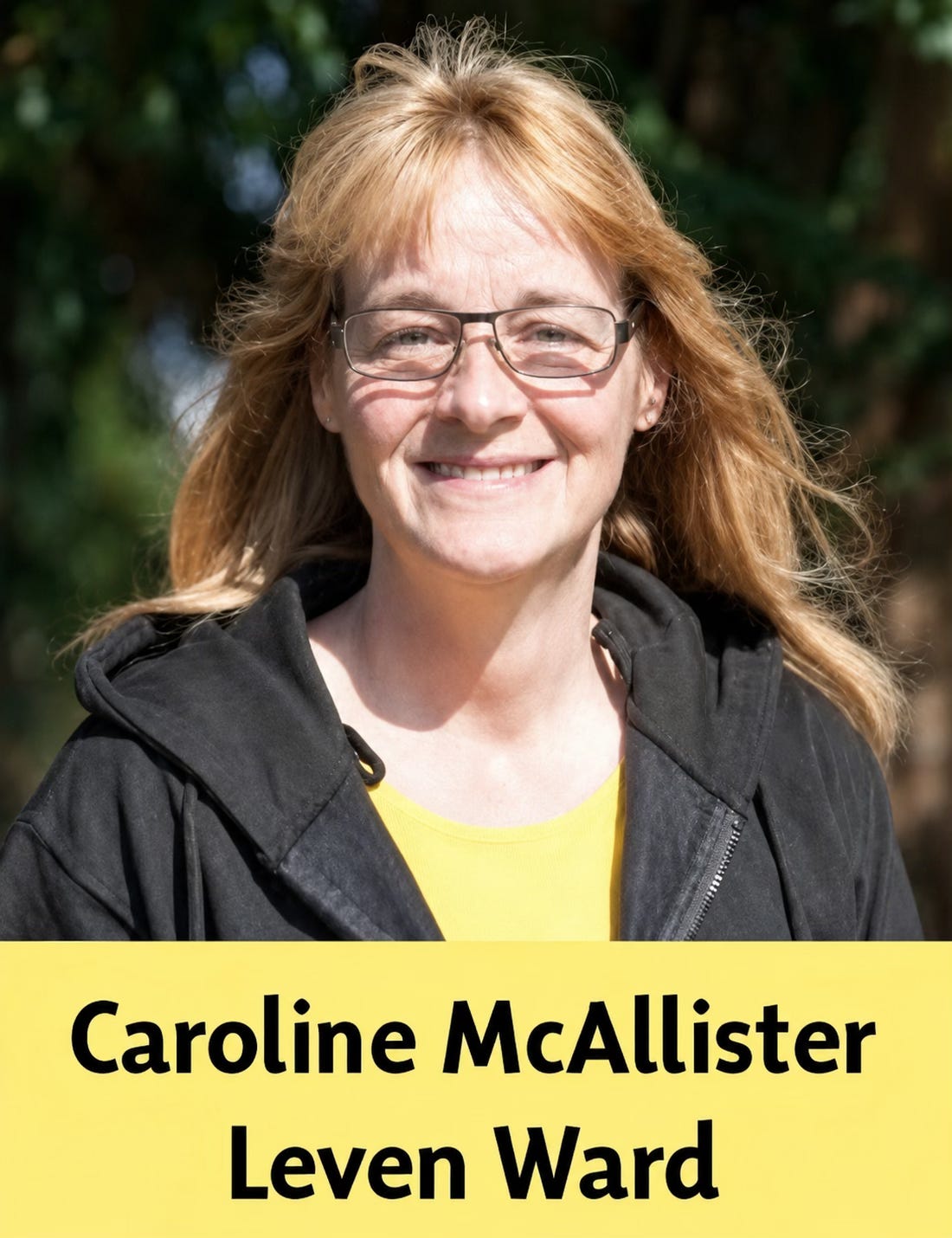
Caroline’s election leaflet from Pic via Caroline McAllister
As a working-class woman in politics, my straight talking, when sharing opinions or ideas, is often mistaken as aggressive. Having to temper how I speak was a challenge at times, particularly when dealing with certain demographics, both in politics and in my working life. It did not escape my attention that men are held to different standards from women. An aggressive man is regularly viewed as assertive, while an assertive woman is viewed as aggressive. On more than one occasion, I found that I was being judged not on what I was saying, but by how I was saying it. This frustrated me enormously, but I learned to play the game. I had to if I wanted to achieve what I had set out to do.
When women’s voices are ignored
The introduction of the Gender Recognition Reform Bill at Holyrood also taught me another lesson: women’s rights can be attacked or removed at any time, on the whim of men too often supported by women.
The poor treatment of survivors of male violence during that debate showed how many politicians had embraced luxury beliefs, while ignoring the realities faced by working class women. They can’t afford to go elsewhere for the support they desperately need to recover, and yet were effectively abandoned when Rape Crisis Scotland and Scottish Women’s Aid adopted the Scottish Government’s policy of men in women’s single sex spaces.
The purpose of politics
I am no longer a councillor, but I remain convinced that the political class – across the UK - is too often removed from those they represent. The Covid-19 pandemic taught us who are the country’s real key workers: carers, shop assistants, bin men, all crucial jobs populated by the working class. The men and women who keep the country running, who are invaluable across society, yet remain some of the lowest paid.
Five years on, the Scottish government is cutting funding to councils, which then have little choice but to make cuts to services, but still why would Glasgow City Council reject free school meals for primary school children, choosing instead to spend money on granite paving blocks imported from Italy?
Why cut the care packages of those who need them to remain safely at home, yet millions of pounds are wasted in litigation doomed to fail. Why are certain groups disproportionately funded, while those on the frontline struggle to survive? Most importantly, why are working class communities always on the frontline of budget cuts?
If we are serious about building a fairer, more progressive and more caring society, then there must be a change in attitudes. Politics should never be about people sitting comfortably in council chambers and parliaments, preening and posturing over fashionable causes while those at the sharp end are ignored.
Politics should be about practical solutions to improve people’s everyday lives. Or else, what is the point?
Caroline McAllister describes herself as as a woman who won’t wheesht, because to do so would be to betray women who are denied a voice (from The Women Who Wouldn’t Wheest)

In April last year, the UK Supreme Court determined that “sex” in the Equality Act 2010 meant, and had always meant, what it called “biological“ sex, and that this was the case whether or not a person had obtained a Gender Recognition Certificate.
The Court rejected an argument that for women-only services, spaces and activities, some men should be treated as if they are women.
The misunderstanding of the law it was clearing up was rooted partly in the Code of Practice on Services, Public Functions and Associations, issued by the Equality Human Rights Commission (EHRC) in 2011. The 2011 Code wrongly promoted the idea that organisations should be treating sex as a question of self-identification.
The EHRC is the UK’s regulatory body for the Equality Act. It has the power to issue codes of practice on any area under its control, to help people understand what the law means in practice. There is a separate Code for employment, unaffected by the Court’s judgment, as it was not used to promote the idea of self-identification.
These codes are “statutory”. This means they are created under another law, the Equality Act 2006. This says that failing to comply with a code does not of itself put someone on the wrong side of the law, but an organisation can use following a code as a defence if it is taken to court, and courts should take a code into account, if they think its content is relevant (section 15). Statutory codes play a supporting role to the law, therefore. They do not interfere with what the law actually says.
To produce a statutory code, the EHRC has to send a draft copy to the relevant government minister, currently Bridget Phillipson MP, who then lays it in front of Parliament. After 40 days, the EHRC can publish the Code, and the minister takes a final legal step, setting a date for it to go live.
During those 40 days, MPs or members of the House of Lords may decide to have a vote on the code. No vote is needed, but if MPs do hold a vote, and vote against a code, the process ends. The law remains exactly the same. There is simply no new code to help people understand it.
The EHRC cannot by itself amend a code to keep up with developments in the courts. It has to go through the whole process above. The 2011 Code was already in need of updating to reflect new legal cases since 2011 on other, unrelated issues before the Supreme Court judgment came out. The EHRC consulted on a revised draft last year.
A revised version Code was laid in front of Parliament on 21 May. The 40 day period ends in early July. It brings the Code into line with the Supreme Court judgment, but also contains a section, added after the consultation, making claims about legal barriers to asking about a person’s sex. Sex Matters and the Lesbian Project are among those who have written to the minister, arguing the new material misrepresents an area of law outside the EHRC’s remit and competence, and in practical terms undermines the lawful advice. It is not clear how this can be dealt with.
A group of around 90 MPs, so far, have signed an “Early Day Motion” hoping to bring a vote against the code, because they think sex in the Equality Act should be based on self-identification. They represent around 1 in 5 of all relevant MPs (Labour MPs involved in government cannot sign an EDM). At the time of writing, the largest number by party are Liberal Democrats (37, out of 72 LD MPs at Westminster) and Labour (37, out of around 250 free to sign).
Pro self-ID MPs held a debate on 1 June. For Women Scotland’s Twitter/X thread on it is here. Many of the speakers misdescribed the relationship of the code to the law, the content of the Supreme Court judgment, and the process for the updating the Code.
Unless there is a dramatic increase in the number of signatories it is very unlikely that this move will succeed. But if it did, it would have no effect on organisations’ legal responsibilities. It would simply mean they would continue to have to work out for themselves how to follow the law, as they already need to be doing, perhaps with help from lawyers, and without free help from the EHRC.

Navigate the public policy maze with the editors as they keep a watching eye on the issues affecting women

Pic by: akinbostanci via iStock
We are all busy, so it is hard to keep up with what people in power are up to - particularly in relation to policies and services that affect women and girls. We can’t offer a full monitoring service, but in each edition we will highlight a few things to watch out for, and where you can find more information.

Surrogacy reform will exploit working-class mothers
At Westminster, there are signs of renewed effort to bring in reforms to surrogacy law proposed by the Law Commission in 2023. These suggested that mothers lose parental rights at birth, making it harder for them to change their minds, leaving the mother off a child’s birth certificate, reducing expert oversight for surrogacy, and allowing advertising for surrogate mothers, for whom a minimum age of 21 was proposed. The minimum age for commissioning parents was proposed as 18. Bringing in babies born abroad would be made easier and the cap would be removed on “expenses”.
As Surrogacy Concern has said “this would be a disaster for working class women and children.”
Yesterday (June 4) Baroness Deech led a debate in the House of Lords calling for the updating of the law around fertility and surrogacy, but also saying “When I started to research this speech, I thought that surrogacy law and a reformed HFEA law could be combined in one… But surrogacy still needs more wariness and consultation… there are great reservations about the practice of surrogacy.” She commented also “with increased use comes the increased danger of exploitation of poor women and risk to their health and their babies’ welfare.”
Responding for the government, Baroness Blake said “the Government recognise the significance and importance of this issue and welcome the Law Commission’s comprehensive report, published in 2023. However, given the limited parliamentary time available and competing legislative priorities, we are not currently able to bring forward the reform immediately, but we will publish a formal response as soon as capacity allows and keep this issue under review.”
Surrogacy is a growing industry. On 17 June, Surrogacy UK will be holding an event in Parliament, to which all MPs are invited, as well as staff and peers, ahead of another expected debate, on this petition arguing that:
The law must change so intended parents in surrogacy arrangements are recognised as their child’s legal parents from birth. Families should not have to go through months of court proceedings and social worker visits to be recognised as the parents of a child they planned and love.to remove surrogate mothers rights at birth.
The event is sponsored by Liberal Democrat Layla Moran MP, Chair of the Health and Social Care Committee (who is also a signatory to EDM discussed in our briefing above).
There is more about the Law Commission proposals on the website of Surrogacy Concern.
UK Parliament: click here for future business
Northern Irish Assembly: click on ‘Business Diary’ for a week by week schedule
The Scottish Parliament and Senedd Cymru | Welsh Parliament are now sitting again after the elections.

All content is protected: articles may not be reproduced without permission from the authors or this newsletter. For any reuse requests, please contact us in the first instance.