ISSUE 23: The Frontline
A 21st century feminist publication where women's voices have power
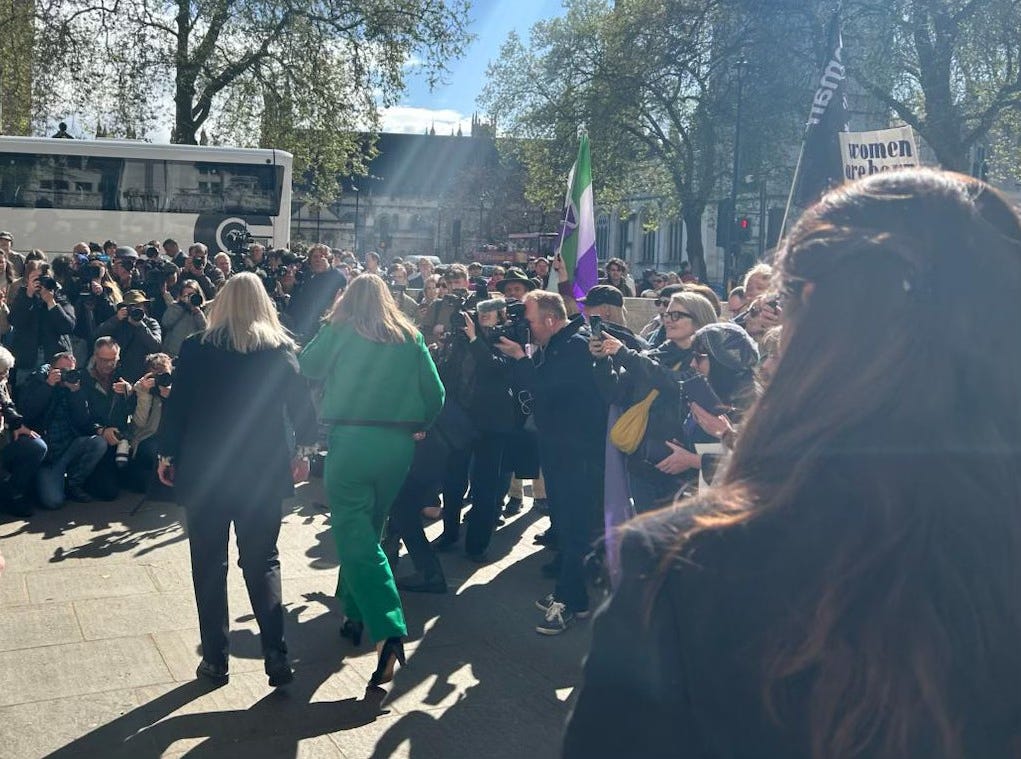
Marion and Susan of For Women Scotland leaving the Supreme Court after their historic victory on April 16, 2025. Pic by Lisa Mackenzie

Welcome to issue 23, which looks ahead to the anniversary of the Supreme Court’s ruling on the meaning of ‘sex’ in the Equality Act 2010, in the case brought by For Women Scotland, on 16 April.
A year ago, many women were tense with anticipation about what the Court would say. Few of us, however, were expecting backlash and inertia on the scale seen in the past twelve months, with government frozen in inaction, at best, and many other organisations taking their cue from that.
We mark this week with pieces which remind us why the judgment matters, and why women need governments and public bodies round the UK just to get on with their job.
Julie Bindel looks back to campaigning on an earlier decision which provoked a severe and prolonged backlash, the criminalisation of rape in marriage. Recalling how long she has been raising concerns about the erosion of the rights of women as a sex, she urges readers to dig in for a continuing battle to get back to reality.
We hear too from Jenny Wilmot, a co-founder of Scottish Lesbians, one of the ‘lesbian interveners’ in the court case. The interveners stepped in after earlier rounds of the case exposed the courts’ limited understanding of why the arguments here matter so much to lesbians. As Jenny recounts, the argument was pithily expressed by their barrister, Karon Monaghan KC, with the phrase ‘lesbians are not attracted to certificates’; and the Supreme Court judges heard it.
Our Woman of the Week is US suffragette and legal campaigner, Alice Paul. It is now over a century since she helped draft an amendment to the American Constitution aimed at making discrimination on the grounds of sex unlawful. Women in the US continue to campaign for its ratification.
In Policy and Power, we highlight the current Westminster inquiry into routes into sport for women and girls, seeking submissions by 8 May.
A year has been too long to wait, but as this week’s edition shows, securing the rights of women is a project without end. The last year has often felt frustrating, but in the longer story of women’s legal campaigning, it is barely a moment. The pressure on government and others in authority to stop dragging their feet here is not going away. Women will not be timed out.
The button at the end of this issue takes you to our subscriber chat. As ever, you can also find us in real time on X/Twitter, at @DalgetySusan and @LucyHunterB and our shared account @EthelWrites.
We are delighted that we can now plan for our fortnightly 21st century feminist publication to remain fully accessible. But we depend on some of our readers becoming paid subscribers so that we can pay our contributors, as well as keep the newsletter free so ALL women can access it. If you can afford a paid subscription, please consider getting one.


Julie Bindel. Image via Julie Bindel
One year on: The Supreme Court drew a line — but feminists know the fight to defend women’s rights never ends
By Julie Bindel
Here we are, a year on from the Supreme Court ruling – an anniversary worthy of celebration. But with many years of feminist activism behind me, I know that the fight for true liberation for women and girls is a bit like painting the Forth Bridge: the task is never done. There is no moment at which we can dust off our hands and relax. This ruling is an important step towards the obliteration of gender ideology – but the road from legislation to hearts and minds is proving longer and bumpier than many had hoped.
This assault on women’s rights, safety and sanity is nothing new. But before I make my case for it all being as old as patriarchy itself, let me say that the gender lunacy is both far worse, and way more dangerous, than what had gone before. The reason for this is that the liberal masses were taken in by it – and the majority of otherwise sane citizens kept quiet and went along with it.
We British feminists campaigned throughout the 1980s to criminalise rape in marriage. As we know from attitudes around domestic violence, some of which are still prevalent today, marriage gave men a get out of jail free card. It was seen as terribly unkind for women to refuse men sexual release and enjoyment, because everyone ‘knew’ that men needed more sex than women did. Conjugal rights really were taken literally: a man could have sex with his wife whenever he felt like it.
Surveys during the build-up to the eventual criminalisation of rape in marriage (1992) found that some women were told, during sexual assaults by their husbands, that they couldn’t be reported to the police because rape was within their legal rights.
Many judges supported this right to rape, with one in particular finding a woman guilty of “contributory negligence” in a 1981 case where the victim had been hitchhiking. He said that “in the true sense she was asking for it”.
When the law was finally put before Parliament, there was an immediate backlash. The novelist Piers Paul Read wrote: “There is a grave danger that in extending the concept of rape into the marriage bed, we will end up by increasing real rape of the abominable kind.”
I first wrote about transgenderism in the Sunday Telegraph Magazine at the end of 2003 – 23 years ago (a piece that never went online). Interestingly, it caused me no grief whatsoever, despite the fact that several journalists had read it.
The week it was published, I was at an industry party among some 200 journalists of all stripes. Many were full of praise for the piece; no-one said it was ‘brave’ or ‘controversial’. They were pretty horrified at the transsexual industry.
Funny how not one of them stood up for me a few weeks later, when my infamous comment piece ‘Gender Benders Beware’, was published in the Guardian – which caved in following a tsunami of complaints from the emerging trans activist movement. The elite kept quiet – perhaps they foresaw what was coming.
In 2008, I was nominated for a Journalist of the Year award by Stonewall, then under the leadership of Ben Summerskill. When calls came for my nomination to be removed, he seemed to stand firm, muttering about free speech and it being a public vote. He told me he would stand for what was right. I later discovered, thanks to the writings of trans activist and former Cambridge city councillor, ‘Sarah’ Brown that Summerskill had promised him he’d “make sure” I didn’t win.
I note that back then, “suck my formaldehyde pickled balls” Brown had way more currency than a feminist activist who had written extensively in the mainstream media about issues affecting lesbians – and I was the only mainstream journalist doing so at that time. The writing was already on the wall, almost 20 years ago. If only we had been looking for it!
Over the years, venues that had been booked to host events on issues involving women’s rights caved in to pressure from trans activists and cancelled, despite the fact that – as confirmed by the Supreme Court ruling - it was already illegal. In my case, the only venue that stood firm by refusing to cancel one of my events was the Salford Working Class Library.
In 2020, I was booked to appear at the WOW Festival on a panel with Helen Lewis to discuss her new book. Days before, the director, theatre luvvie Jude Kelly called, asking me to “stand down” so as not to cause her any headaches (Queer Isis were kicking off). I refused, telling her she would have to drop me, in which case I would make it public. Helen told her the same, and the event went ahead, to a packed audience.
The rape in marriage ruling had a normative effect across society, symbolising something way bigger than one piece of legislation; men still rape their wives, and many get away with it. But they are not told that they should be celebrated for doing so.
Those men who claimed the ‘right’ to invade our spaces — stripping us of autonomy and legal protection — have had that right definitively abolished by the Supreme Court. And like marital rapists, they will no longer be celebrated.
Thank you, For Women Scotland, and all other interveners – you are the best of feminism in the worst of times.
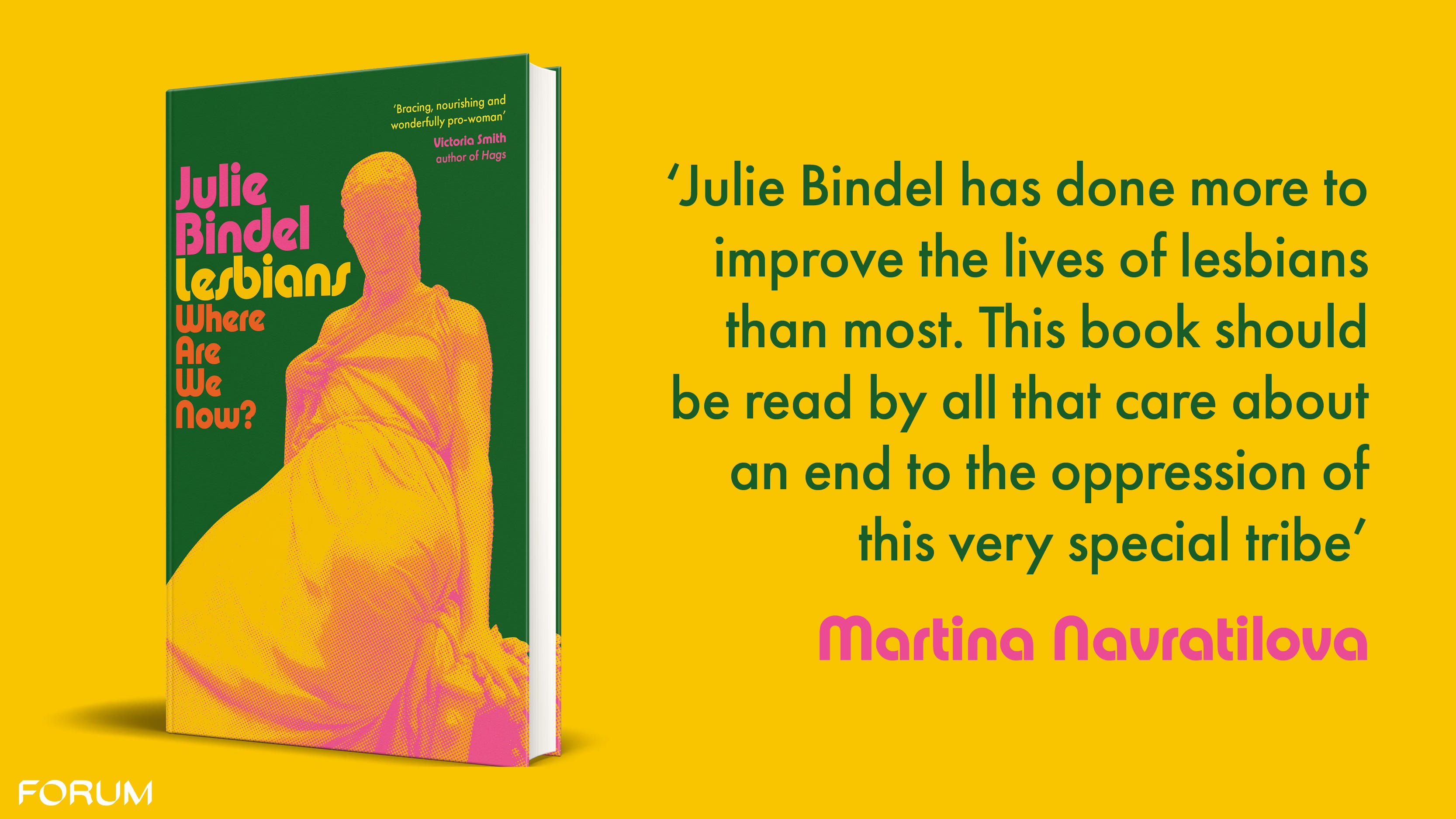
📚Julie’s latest book Lesbians: Where Are We Now? is now out in paperback. Available from all good bookshops and online.
Julie Bindel is a journalist, author, and feminist campaigner against male violence and abuse towards women and girls. She co-directs the Lesbian Project, with Kathleen Stock, which you can find here.
The Supreme Court, the Equality Act, and the meaning of sex: Why the For Women Scotland case mattered for lesbians
By Jenny Willmott
Pic via Jenny Willmott
In 2024 Scottish Lesbians, the group I co-founded, was privileged to intervene, alongside The Lesbian Project and LGB Alliance, in support of For Women Scotland in their UK Supreme Court case. The significance of For Women Scotland’s case cannot be overstated, particularly for lesbians; we have long been at the sharp end of gender ideology.
As lesbians, we’re subjected to everything from prurient interest to sleazy jokes (and worse) from some heterosexual men who find it difficult to comprehend that our sexual orientation does not include them. The rise to prominence of gender ideology in our politics and our institutions has meant a change in this harassment; we now have men claiming to actually be lesbians.
The final ruling of the Scottish Courts, prior to the Supreme Court, asserted that a Gender Recognition Certificate (GRC) legally changed a person’s sex for the purposes of the Equality Act 2010, thus making it (legally) possible for men to become lesbians. In Scottish Lesbians, and no doubt in other similar associations across the UK, we’ve had to have conversations we never thought we would need to have, around the legality of our existence as a single-sex association. We wondered if we would be challenged by a man with a GRC wanting to join us, and what would happen when we inevitably said no. We discussed which of us would be more likely to lose our job, and how we would manage if that happened.
For lesbians, our culture and our community, the impact of the earlier rulings in the case was devastating. We had watched for years as previously lesbian-only groups and spaces announced their new ‘inclusive’ policies and became mixed-sex. Many lesbians self-excluded from groups they had previously relied upon. Now, for the very few groups willing to defend lesbian-only memberships, it was written into law that we had to admit certain men. Ours was an existential fight.
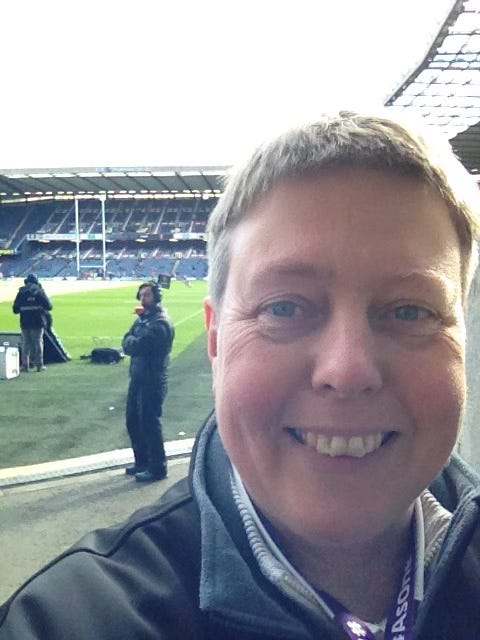
Jenny Willmott. Image vía Jenny Willmott
“We are forever indebted to For Women Scotland for taking their case all the way to the UK Supreme Court, and we are proud that, in Scotland, lesbian love is the love that has dared to speak both its name and its meaning”.
Had FWS’s Supreme Court appeal been refused, homosexuality would have become a matter of state-issued certification - we would have been classed as oriented towards people of the same legal sex, rather than the same biological sex. A lesbian would become a woman (or a man with a certificate) attracted to other women (or men with certificates). It would have been possible for two men to claim protection, thanks to their GRCs, as a lesbian couple.
When the chance arose to intervene in support of FWS, we knew that we had to produce a crystal clear account of the impact on lesbians of ruling that a GRC changes legal sex. We did not undertake the role of interveners lightly - we had painstaking discussions about the risk that we could actually harm the FWS case if our arguments were not understood. We did not want to be the lesbians who lost the case for women!
However, when we started working with the legal team for the lesbian intervention - solicitor Peter Daly, and barristers Karon Monaghan KC and Beth Grossman - it was a huge relief. These legal experts not only understood the case for lesbians, they wove our experiences and our fight into beautifully written pages of legal argument. When Karon Monaghan KC wrote that ‘lesbians are not attracted to certificates’, the point resonated widely. Our argument was crystallised in such a way that it could not fail to be understood. It was an immense privilege to be represented by such a superb legal team, and to have benefitted from their pro bono work.
During the Supreme Court hearing, the Scottish Government’s barrister argued that lesbian associations like ours could continue to operate lawfully by relying on the protected characteristic of belief, in this case gender critical belief (with thanks to Maya Forstater for her earlier legal victory on grounds of belief) rather than our sexual orientation. I’m sure the absurdity of this is obvious! Plenty of men have gender critical beliefs, and many lesbians do not. Thankfully, the ruling in favour of FWS meant that we avoided the strange legal convolutions proposed by the Scottish Government.
The Supreme Court ruling was vital for lesbians. A quick look at the situation in Australia, where lesbians’ events cannot refuse to admit men, shows what would have happened if FWS had lost. There are many countries around the world which have never legalised same-sex relationships; it is shameful that the Government of a progressive country like Scotland, in pursuit of inclusion at all costs, took us to the very brink of erasing lesbians as a sexual orientation.
Access the full Supreme Court judgement here as well as the press summary. The EHRC updated guidance on the Equality Act 2010 is available here.
We are pleased to note that the revised EHRC code of practice includes clear definitions of sexual orientation, and makes clear that gender reassignment and sexual orientation are completely separate and unrelated characteristics. We hope that with a bit more pressure on our Governments, and a lot of work from lesbians ourselves, our culture and our community will be on their way back. We also hope this will mark the beginning of the end for ‘LGBTQIA+’ which has been such a disaster for same-sex attracted people.
We are forever indebted to For Women Scotland for taking their case all the way to the UK Supreme Court, and we are proud that, in Scotland, lesbian love is the love that has dared to speak both its name and its meaning.
Jenny Willmott is a co-founder and director of Scottish Lesbians, a grassroots organisation which advocates for lesbian rights and spaces. She lives in the West of Scotland with her partner, Lorraine, and their three cats.

Atta girl! From prison to the USA Supreme Court: Suffragette Alice Paul’s legacy and the ongoing fight to defend women’s rights in law
By Lily Craven, known to her many fans on Twitter/X as @TheAttagirls
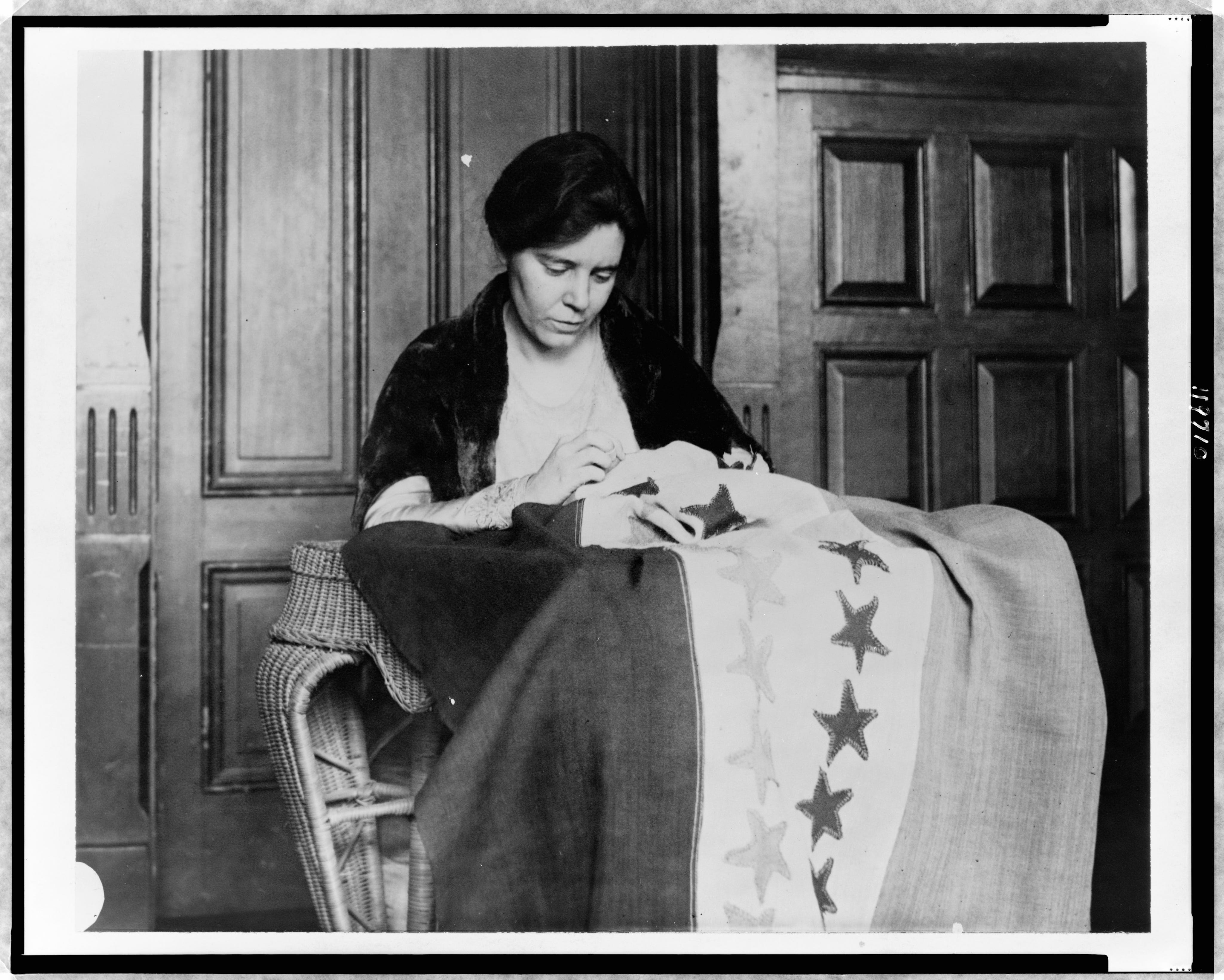
Alice Paul stitching a Suffragette flag, 1912. Pic from the National Photo Company Collection via Wikimedia Commons
One wintry day, a 22-year-old American university student chanced upon an ugly scene: a mob of male students heckling and jostling a young woman as she tried to make a well-reasoned case for women to be treated as equals.
Was this December 2022 or April 2023 outside the University of Edinburgh? Or 2025 at Cambridge University? No.
It was 20 November 1907, near the University of Birmingham.
The young woman couldn’t make herself heard over the jeers and abandoned her speech, but she stepped down from the platform with such poise and grace that the young American made her way over to express sisterly solidarity.
That’s how Woman of the Week Alice Paul (1885-1977) of New Jersey met Christabel Pankhurst (1880-1958) of Manchester: two women divided by an ocean but united in their determination to secure suffrage for women. She became a full-time organiser for the Women’s Social and Political Union and took part in demonstrations, including ones that led to arrests and hunger strikes.
“It is incredible to me that any woman should consider the fight for full equality won. It has just begun.”
Alice returned to the US to form the National Woman’s Party with Lucy Burns and when President Woodrow Wilson dismissively told them to go away and harness public opinion for women’s suffrage, she set out to do exactly that.
“I never doubted that equal rights were the right direction. Most reforms, most problems are complicated. But to me, there is nothing complicated about ordinary equality.”
“We women of America tell you that America is not a democracy. Twenty million women are denied the right to vote.”
Imprisoned for ‘crime’ of standing in silence
They formed the Silent Sentinels: 2,000 women taking turns standing outside the White House for over two years in silent protest at Wilson’s refusal to discuss the matter, even though his own daughter shouted encouragement from her upstairs window.
British suffragettes were harassed, manhandled and arrested “for shouting and unfurling banners'‘, but American sisters were harassed, manhandled and arrested for standing silently. Onlookers ripped the signs out of their hands and beat them up while the police looked on. Nearly 500 were arrested and 168 imprisoned.
When the number of detained suffragettes was greater than the District of Columbia Jail could hold, they were taken to Occoquan Workhouse, Virginia, where they were deprived of every possession except clothing. A communal shower awaited and they were made to strip naked, share one bar of soap, issued with dirty, baggy, uncomfortable prison clothing, and given maggot-infested food.
Alice was arrested for carrying a banner directly quoting Woodrow Wilson: “The time has come to conquer or submit. For us there can be but one choice. We have made it.” He could say it — not her. She was taken to Occoquan and placed in solitary confinement for two weeks on a severe diet of bread and water.
Weakened by her treatment and unable to walk, she was transferred to the prison hospital where she began a hunger strike. Other women joined her. Prison doctors force-fed them by tubes, a practice now classed as torture, but still they resisted, and so on the night of 15 November 1917, the superintendent deliberately set the prison guards loose on the women.
They threw one woman into a dark cell with such force that her head smashed against an iron bed, knocking her out. Her terrified cellmate thought her dead and had a heart attack. A second woman was slammed repeatedly over the back of an iron bench. Lucy Burns was beaten, her hands chained to the cell bars above her head, and she was left there for the night. In solidarity, the other women — who had themselves been grabbed, dragged, pinched, beaten, choked, and kicked — held their own arms above their heads until she was released.
Public opinion was galvanised by newspapers carrying horrific stories about how the women had been brutalised, and support for women’s suffrage grew. They were released after appeal judges ruled unanimously that every single one had been illegally arrested, convicted, and imprisoned.
The tide of public opinion did its work and drove Wilson to act. Within two months, he declared that women’s suffrage was urgently needed as a “war measure” and called on Congress to agree. It took a state-by-state fight, but the Nineteenth Amendment was finally ratified on 26 August 1920.
“To me, it was shocking that a government of men could look with such extreme contempt on a movement that was asking nothing except such a simple little thing as the right to vote”, but Alice couldn’t stop there.
“When you put your hand to the plow, you can’t put it down until you get to the end of the row…There will never be a new world order until women are a part of it.”
Equal rights in law
She co-drafted an equal rights amendment to the American Constitution that would make discrimination on the grounds of sex unlawful. It was introduced in Congress in December 1923.
“I always feel the movement is a sort of mosaic. Each of us puts in one little stone, and then you get a great mosaic at the end.”
Would it surprise you to learn that it took until 2020 for Virginia to become the 38th state to ratify the ERA, but earlier congressional deadlines had lapsed, and several states later voted to rescind their approval?
It has still not been ratified.
Here in the UK, the Supreme Court ruling is a year old, and we still must use lawfare to defend our lawful rights under the Equality Act 2010. It’s tedious and tiring, but we “can’t put the plow down until we get to the end of the row.” Every bruise, every broken rib, every pair of collapsed lungs sacrificed by the women who fought for us would be in vain. We cannot let them down now. We owe it to our daughters and granddaughters.
Alice would agree.
“It is incredible to me that any woman should consider the fight for full equality won. It has just begun.”
In her misspent youth, Lily Craven spent 28 years in prisons in England writing risk assessments, operational orders and contingency plans. Now retired, she spends her time finding ordinary women whose extraordinary achievements were buried in dusty footnotes in history books and writes about those instead.

Navigate the public policy maze with the editors as they keep a watching eye on the issues affecting women

Pic by: akinbostanci via iStock
We are all busy, so it is hard to keep up with what people in power are up to - particularly in relation to policies and services that affect women and girls. We can’t offer a full monitoring service, but in each edition we will highlight a few things to watch out for, and where you can find more information.

Pic by Good Boy Picture Company via iStock
Routes into sport for girls and women
Westminster’s Women and Equalities Committee is holding an inquiry into different ways women and girls can be involved in sport beyond participating as athletes, players and competitors. Some of the issues it will consider are:
To what extent are masculine cultures in sports still presenting barriers to girls and women taking up non-playing roles? What is being done to break down these barriers and what more could be done?
To what extent do gender bias, discrimination and misogyny exist in areas such as coaching, sports science, officiating, administration and governance, and journalism/broadcasting? How do women’s experiences vary across different sports? Is enough being done to address the issues?
Is enough being done to protect girls and women from harm, including harassment, abuse and violence, particularly in coaching, officiating and journalism/broadcasting? What further steps should be taken?
It will also look at coaching, sports science, officiating as referees and umpires, roles in club administration and sports governance, plus access to sports journalism and broadcasting. The inquiry will explore access from grassroots level and pathways to professional and elite careers.
The committee welcomes submissions to the inquiry. You can submit evidence until Friday 8 May 2026. Click here for details.
Wherever you live in the UK, make sure you can vote on Thursday 7 May
2026 is a big year for elections in the UK. There are around 5,000 council seats in England up for grabs, including in all 32 London boroughs. In Scotland, voters will decide who will run the Scottish Parliament for the next five years and in Wales the Senedd election will elect 96 members to the expanded Welsh Parliament.
It is less than 100 years since women secured their full right to vote on equal terms with men when the Equal Franchise Act was passed in July 1928. If you need a postal vote, secure one now.
Deadline for postal voting in the 7 May elections
To make a postal vote for the 7 May 2026 elections, your electoral registration office must receive your application before 5pm on Tuesday 21 April 2026.
For information on how to apply for postal vote, wherever you live in the UK, click here
UK Parliament click here for future business
Northern Irish Assembly click on ‘Business Diary’ for a week by week schedule
Scottish Parliament is not sitting again until after the election
Senedd Cymru | Welsh Parliament is not sitting again until the after the election

All content is protected: articles may not be reproduced without permission from the authors or this newsletter. For any reuse requests, please contact us in the first instance.