ISSUE 20: The Frontline
A 21st century feminist publication where women's voices have power

Pic from iStock via Kar-Tr

Welcome to issue 20. In a few day’s time, the world celebrates International Women’s Day. Politicians will queue up to pledge their solidarity to women and girls, business leaders will boast of their commitment to equality and celebrities will jump on the passing bandwagon. It is all too easy for the authentic voices of women and girls to get lost in the corporate PR hype that surrounds this day which is, at its heart, a celebration of women’s achievements, while mobilising for the economic, social and cultural liberation of women across the globe.
The Frontline can make women’s voices heard because of the support we get from our readers. This allows us to commission stories from women across the world - from sub-Saharan Africa to the United State of America; from the heart of Spain to London and across the UK.
If you don’t feel able to commit to a regular subscription, you can make a one-off contribution to this project, to celebrate International Women’s Day. Simply click on the button below and it will take you through to our Stripe account. As ever, we are grateful to everyone who supports us in any way. And please consider sharing this issue of The Frontline with your networks - it will help get women’s voices heard.
In this issue we hear from one of Britain’s strongest feminist voices and best writers Suzanne Moore. She writes about the small acts of kindness from other women which have sustained and inspired her throughout her hugely successful career as one of the country’s leading commentators.
Rebecca (Bex) Hope tells the story of how she and her aunt Jane Rogers set up the pod cast Inciteful Sisters to ensure that women’s voices are heard. They have now broadcast 38 episodes, with voices ranging from For Women Scotland, whose historic Supreme Court victory last year changed the political landscape for good, to Lexi Ellingsworth from Stop Surrogacy UK. Bex and Jane are building an important feminist archive and we look forward to their next 38 interviews.
And at the start of Women’s History Month, our Woman of the Week is Margaret Fuller, a woman who defied her times to become one of the most challenging feminist voices in 19th century United States.
The button at the end of this issue takes you to our subscriber chat. As ever, you can also find us in real time on X/Twitter, at @DalgetySusan and @LucyHunterB and our shared account @EthelWrites.
We are delighted that we can now plan for our fortnightly 21st century feminist publication to remain fully accessible. But we depend on some of our readers becoming paid subscribers so that we can pay our contributors, as well as keep the newsletter free so ALL women can access it. If you can afford a paid subscription, please consider getting one. Thank you.


At the heart of feminism is women holding each other up, offering inspiration, advice and childcare when necessary - oh, and lunch
By Suzanne Moore
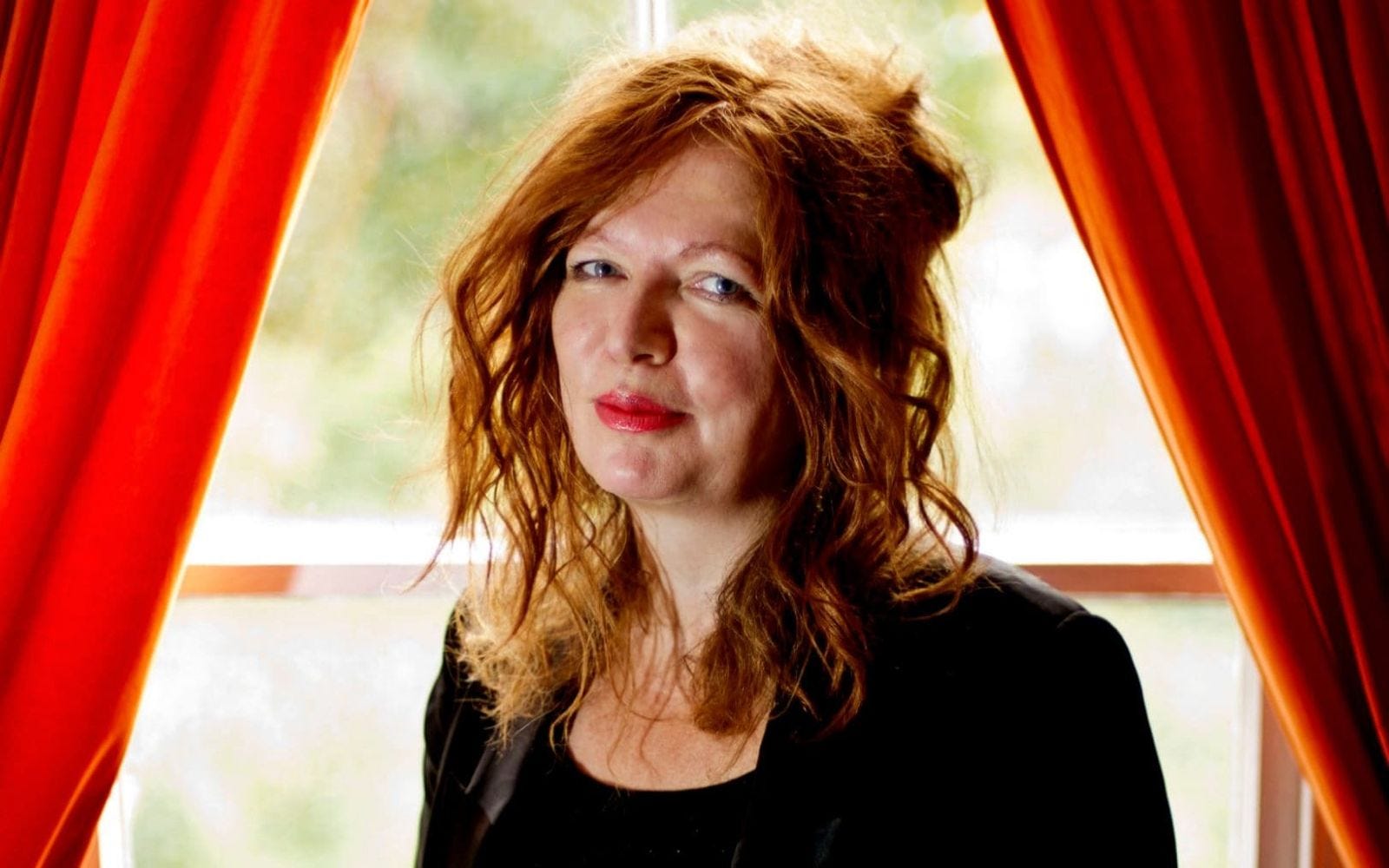
Image via Suzanne Moore
You can’t move these days without some “inspirational” quote being sent to you on a birthday card or Tik-Toked or jumping out at you from an innocent tea towel. The intention is good, but the reality is mind-numbingly banal. The deeply annoying “Cheer up, it may never happen” has given way to a lot of cod philosophy and self-help woo that is balm sold as empowerment.
Inspiration, of course, is a wonderful thing but we tend to speak of it as a mystical happening, as a bolt out of the blue, a flash of perception that cascades down. These instantaneous visions may turn into a book, a painting, a campaign. Maybe it is like that sometimes, for some people, but for most of us life is more mundane. We all have our moments sure, but what has become ever more valuable to me is not the initial rush of an idea but the nods and winks along the way that have made it possible for me to do what I do.
The women who helped me build my career
I could never have sustained a career in writing or have kept going without the many small acts of kindness that I have benefited from.
At the time, often, I did not realise how important they were. In my second year at college, I got pregnant and assumed I would have the baby and carry on. I was young and fizzing with excitement over what I was learning. The guy who ran my course made it clear that he thought I would have to stop studying and “stay with the baby”.
Lon, one of my favourite lecturers, an incredibly cool anthropologist, had let me go my own way, doing independent studies on everything from Paulo Friere to Tarot cards, and merely noted these discussions with a wry smile on her face. She then announced “Women all over the world carry on working with their babies, so Suzanne will too. She can change the baby in my office. I will get some clothes together”. The course leader dared not contradict her.
And that’s what happened. I did my third year breast feeding my eldest whilst imbibing post-structuralism.
Women need space, income and childcare to write
When I first started writing, I had a very strict editor who never gave me too much praise but now I realise was teaching me how to accept criticism. A high point was when she said “I quite enjoyed that”, as so often it was “That was not one of your better weeks”. All I wanted to do was please her. I found out years later she has persuasively argued for me to get a job that I wanted, that she has been solidly behind me all the time. She just didn’t announce it.
Other editors have done that for me and become mentors. They inspire you because you don’t want to let them down. They have taken a chance on you. They have trusted you.
This is why inspiration is never purely abstract. The conditions women need to write in – which Virgina Woolf wrote about in A Room of One’s Own – are really the conditions women need to think in: space, income and, I would add, childcare.
The number of times when friends have taken my kids out while I needed to finish something or offered help are too many to count. There have also been the friends who from the off have simply told me that I could do what I wanted to do. One of the key people in my life is a woman who once read my thesis in a library and wrote me a postcard saying “You can write. Coffee”. There was no number or address but sometime later I heard someone speaking at a conference and knew it was her. She has been a lifelong support to me. Such flashes of recognition count for so much at the beginning of a career. Later on, recognition may come from high status folk and that is flattering, but it’s the people who gave you a hand up when they didn’t need to that really matter.
When things go wrong, kindness matters even more. It steadies the ship. I have always written about feminism, but the reaction to my arguing for sex-based rights in a liberal newspaper (The Guardian) floored me and I ended up leaving. What sustained me during this horrible time were again the nods and winks from other women. Some were teaching assistants, some were big names, many were too scared to go public with support for my position, so I remain especially grateful to those who did.
While I remain distraught that the rights for which women have fought so hard are being dismantled, there has been a camaraderie amongst gender critical women which has often cut across political difference. This has been a revelation.
If at the beginning of my career I relied on small acts of kindness, what sustains me now is this mutual inspiration. We have to be our own muses. And each other’s.
That is surely what feminism is all about. And lunch.
Suzanne Moore is a journalist who has written for everything from Marxism Today to The Daily Telegraph, where has a weekly column. She has three children and no hobbies.
And just like that, we started a podcast: Rebecca Hope on how she and her aunt set up Inciteful Sisters, a feminist podcast where women can talk freely about their sex-based rights
By Rebecca (Bex) Hope
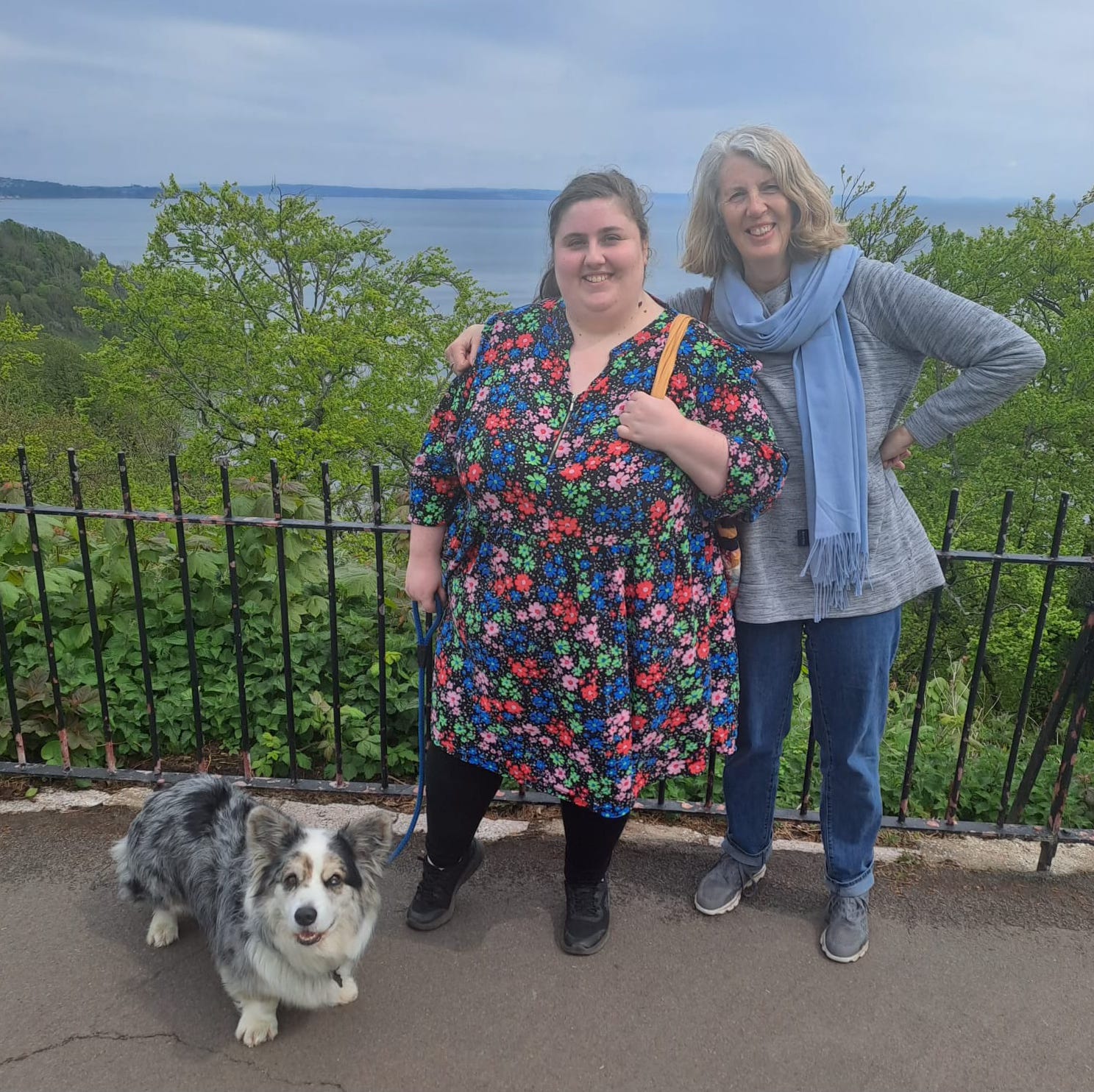
Bex (left) and Jane with Dodger, one of Jane’s two corgis. Image via Jane Rogers
Since November 2024, Jane - my aunt - and I have produced Inciteful Sisters, a woman-centered podcast. We started it with the intention of making a record of women’s recent history by capturing the voices of those women fighting for the sex-based rights of women and girls, and giving a platform to those who may struggle to find one within mainstream spaces.
The podcast didn’t spring up out of nowhere, of course. Jane and I are both sex realists and had spent years discussing gender ideology, women’s rights and the current political landscape. My peaking began ten years ago, in 2016. I was fresh out of university, a liberal feminist, Labour Party supporter, and had taken a voluntary position working in asylum seeker receptions and refugee camps overseas.
My first camp was relatively small, with around 400 residents, and was mixed sex. There was a single women’s section, an unaccompanied children’s section and a section for families within the centre, but the majority of occupants were single adult men. During my three years in this role, I worked at and witnessed multiple refugee camps and reception centres, and the experience shook the cosy, privileged Libfem perspective right out of me.
Becoming a radical feminist
On my return to the UK in 2019, I found I could no longer relate to the online feminist spaces I had once frequented. I felt at odds with it all, like a soldier returning from war. The issues women faced globally didn’t feel far away and separate from me or my feminism, and the need for female unity was clear and urgent to me. I found myself livid at the slogan-based feminism others my age engaged in. Being gender critical and a radfem was inevitable, but at 24, in the pre-Connie Shaw days, it was lonely too.
In 2019, Jane mentioned the furore around JK Rowling and trans women. I can still remember my heart skipping a beat and mentally instructing myself not to say too much at once. I said I agreed with JK, and suggested she look into the topic. Classic Jane, the next week she came back fully briefed on the situation, and ready to talk more. I can’t describe the relief I felt, to have someone so close to me with whom I could finally be open.
Jane is a natural organiser and very good at finding projects to get involved with.
Very quickly she found groups that needed her skills and immersed herself in various women’s groups and activities to gather data, lobby local councils and generally raise awareness.
Jane has another skill though. She’s very good at finding projects for other people too. Being my aunt, she happens to know me quite well. And over the years she has had me painting props for the local panto group, dressing as a suffragette to hand out ice creams at the village revue, hosting interviews at the Manchester Fringe Book Festival, and yes – writing this article right now. (Thanks Jane!)
And so naturally, once we had both peaked, I was vaguely aware a silent countdown had begun to my next ‘voluntelling’ - some TERFy project she’d signed me up for. It’s actually one of my favourite parts of our friendship. Many a project has been started out reluctantly and ended up being a great deal of fun and a cherished memory.
The podcast was no different. Jane had been asked to host interviews at the Virago Women’s Workshop (@ViragoWomen on X) in Leeds and invited me to see her speak to Susan (Dalgety) about the book The Women Who Wouldn’t Wheesht.
Jane mentioned to me in the car on the way there that she had been thinking it’d be good to record these interviews, so that they could reach a wider audience, if only she had someone to help with the techy side of things. I don’t know if it was naivety or my typical reluctance to take on a new project, but I didn’t pick up the hint at that point.
Walking into the Virago space was like nothing I’d ever experienced. It occurred to me I’d never in my life been into a recreational space solely for women, and it seemed there was a magic in the air. I was gripped by the discussion with Susan, which got straight to the interesting bits, with no need to explain “as a woman” or defend the importance of recognising sex.
Everyone in the room knew sex was real, we weren’t there to discuss that, and so we could move on from it and focus on what we really wanted and needed to talk about. In one evening I was a convert, and when Jane again raised the podcast idea on the car ride home, I offered to help.
I knew instantly what she meant; there is something here we need to capture, something that women from further afield deserve to share.
And just like that, we began a podcast.
Today, the podcast focuses on the continuing discussion around women’s rights, providing a platform for sex realist speakers, organisations, and individuals – including those who are forced to remain anonymous and cannot speak up elsewhere.
Similar to Virago, each of our guests enters the discussion knowing we and our listeners understand the reality and importance of sex-based rights, and there’s no need to defend or define anything. This seems more important than ever as a new generation of young radfems is joining the fight. We have produced over 30 episodes now, and this is likely the best project Jane will ever assign me in my life. Though, knowing her, I’m sure there will be many more to come too.
Bex, aka Rebecca or Becky, was born in Yorkshire and grew up in Devon. She now lives in Scotland with her cats, the would-be sophisticat, Cloud, and Dougie the built-like-a-brickie kitten.
Jane is a southerner, adrift in Yorkshire. Before retirement she worked in colleges. Definitely not a cat person, she shares her home with Dodger and Dascha, cardigan corgis...and her OH, Nick.

Atta girl! Margaret Fuller, literary tour de force, early champion of women’s rights in the US, radical journalist, and war correspondent
By the Frontline editors
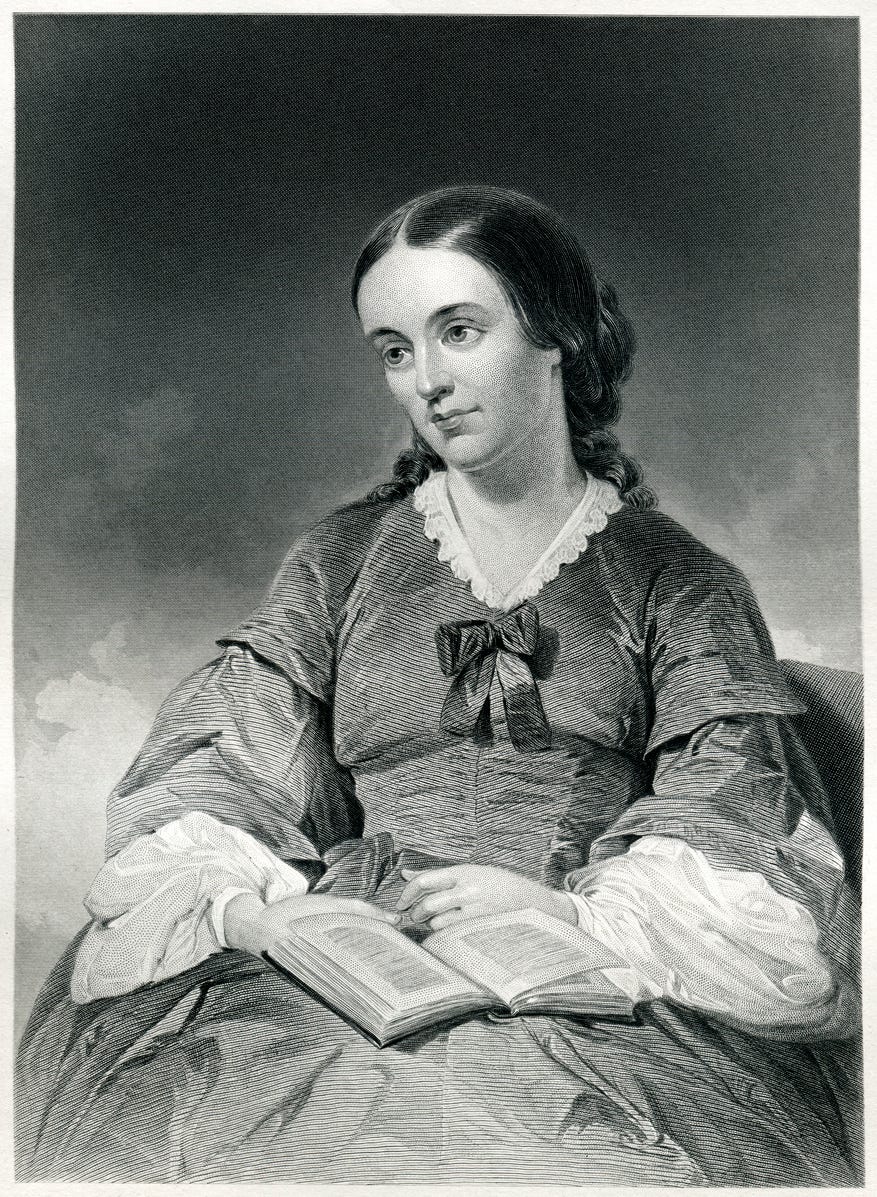
Margaret Fuller. Pic from iStock via traveler 1116
When Margaret Fuller (1810-50) died in a shipwreck off the coast of New York, the United States lost one if its most energetic early feminist voices. What happened afterwards to her work is a story of how one woman’s radical voice took almost two centuries to re-emerge fully in its original form, and still remains subject to revisionism.
Five years before her early death, Fuller had published Woman in the Nineteenth Century, an impassioned call for the legal, economic, cultural and social liberation of women. Selling out its initial print run in a week, the book provoked a nation-wide debate about the place of women in a fast-changing society. It is regarded as the first great feminist work from the United States, comparable to Mary Wollstonecraft’s A Vindication of the Rights of Women.
Her father had been determined to ensure his clever daughter received the sort of intense classical education normally only given to boys. She became the first woman permitted to make use of the library at Harvard University and was fluent in several languages. As part of an intellectual circle that included Henry Thoreau and Ralph Waldo Emerson, she held immensely popular “conversations” for women, a practical expression of her advocacy of female education in an era where the possibility of a university education was denied them. Reputedly, after one of her famous male friends attended and hogged the floor, he was not invited again.
Fuller edited a magazine, The Dial, which became a major literary enterprise showcasing the work of Thoreau and others in her circle. However, unlike her male contemporaries, alongside her extensive and very varied intellectual activities Fuller also cared for older female relatives, and educated her younger siblings. She wrote in a letter: “I weary in this playground of boys, proud and happy in their balls and marbles.” Unsurprisingly, then, Fuller’s interests were not limited to her immediate intellectual world.
“I weary in this playground of boys, proud and happy in their balls and marbles.”
She took up a role as a reporter for the New York Tribune where she exposed the harsh conditions in which many New Yorkers lived, paying particular attention to the plight of women, visiting hospitals, asylums, poorhouses and prisons. At Sing Sing, she interviewed women prisoners, and on one account, spent a night there, using her reporting to raise funds for the Women’s Prison Association. This helped bring into being what may have been the first “halfway house” in the world for women leaving prison, the Home for Discharged Female Convicts. She took a hard eye to her own social class; here you can read her column condemning the “Prevalent Idea That Politeness Is Too Great a Luxury to Be Given to the Poor.” She supported the abolition movement and wrote critically about the treatment of Native Americans.
Woman in the Nineteenth Century caused something of a scandal, with its message that young women should use education to become more independent of domestic ties. Advocating that women should be free to seek any sort of employment, she said “We would have every path laid open to Woman as freely as to Man” and “Let them be sea-captains, if they will.” Her arguments for the reform of property laws, informed by the behaviour of her uncles after her father’s early death, added to the controversy surrounding the book. When the book was sold in pirated form in England, Fuller commented that she was "very glad to find it will be read by women" beyond the US.
The book inspired other women’s rights activists in the US, and appears to have influenced the decision to hold a Women’s Rights Convention in 1848. By this time, however, Fuller herself had been swept up in a wider revolutionary fervour. She travelled to Europe, as the first US woman foreign correspondent, writing still for the Tribune. In Italy, she became a passionate advocate of the Risorgimento, one of the revolutions which rocked mid-nineteenth century Europe, writing “At this moment all the worst men are in power, and the best betrayed and exiled.” She managed a hospital, and met, and possibly married, the Marchese Ossoli, ten years her junior, settling for a while in Florence.
With a tragic irony, given her famous comment about sea captains, the homeward-bound shipwreck in which she, her partner, and their young child died, is sometimes attributed to the inexperience of the crew member who had taken over, after the captain died of smallpox, causing the ship to run aground close to shore. Also lost was her final manuscript, a history of the Italian revolution of which she had been especially proud.
After her death, a group of her male friends felt her writing deserved to be remembered for its scholarship, range and originality and set about producing her collected works. However, in the words of a more recent editor, Noelle A. Baker, “in the process, they wreaked havoc on her papers… They effaced lines of text they considered radical or unwomanly. They regularized her writing with multicolored pens and pencils. They generated complete misrepresentations.” A recent re-editing of her collected works of prose and poetry, personal journals and letters, journalism and philosophical thinking by an all-female team is described as “a reclamation of her authentic voice against the tides of time and censorship.”
Current scholarship finds in Fuller’s rejection of a rigid separation of roles for women and men a message of Butlerian “gender fluidity”. Perhaps in a few years’ time, there will be more room to appreciate comments such as: “Male and female represent the two sides of the great radical dualism. But, in fact, they are perpetually passing into one another. Fluid hardens to solid, solid rushes to fluid. There is no wholly masculine man, no purely feminine woman” as an appeal to freedom that requires no recategorisation of individuals, and her hard-hitting analysis of the constraints on women’s lives as one firmly grounded in the shared experience of sex.
Our right hand woman Lily Craven is taking a sabbatical from The Frontline. She sends her love to her many fans and hopes to be back soon. In the meantime, the editors will do their best to fill her shoes!

Navigate the public policy maze with the editors as they keep a watching eye on the issues affecting women

Pic by: akinbostanci via iStock
We are all busy, so it is hard to keep up with what people in power are up to - particularly in relation to policies and services that affect women and girls. We can’t offer a full monitoring service, but in each edition we will highlight a few things to watch out for, and where you can find more information.
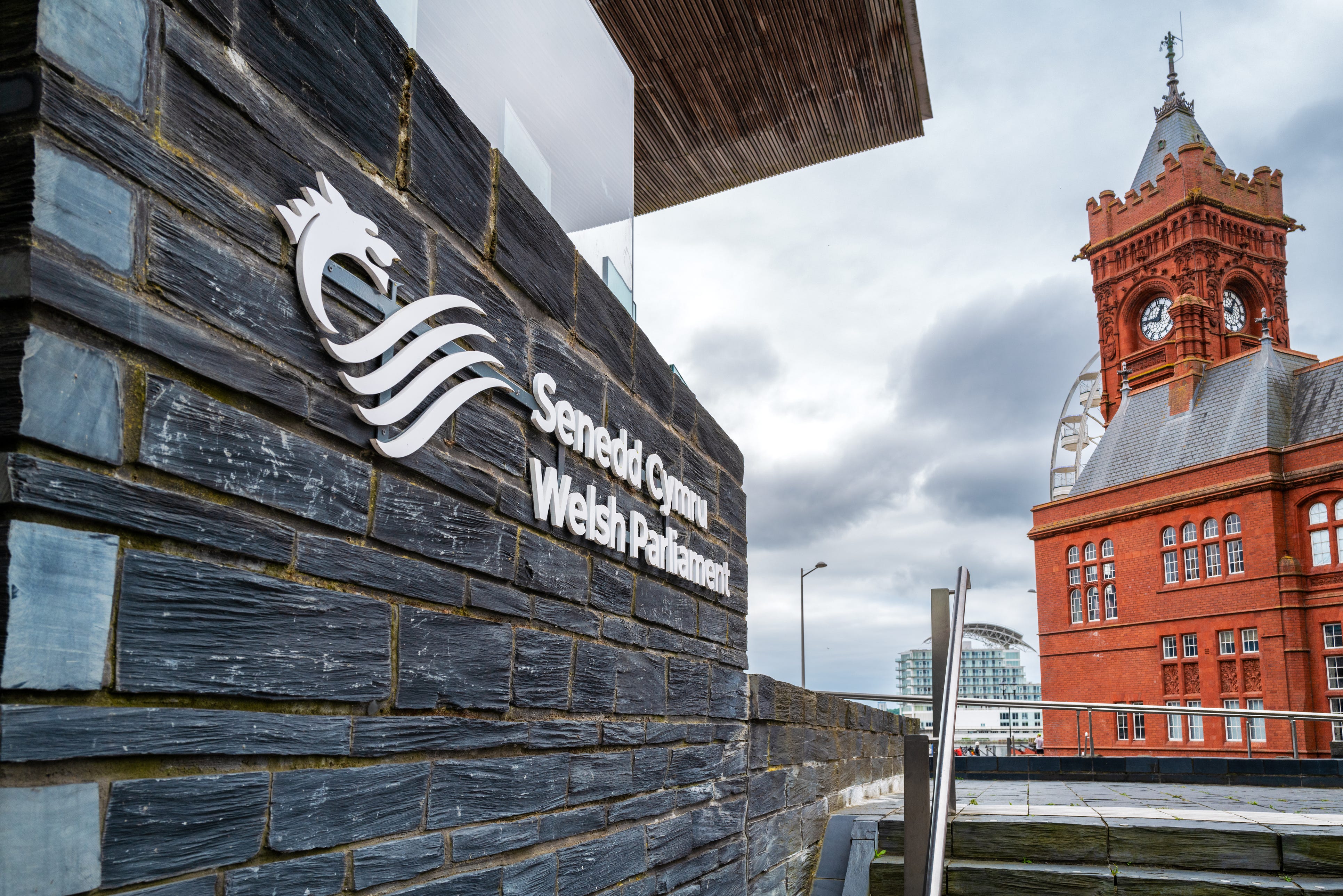
Senedd Cymru in Cardiff. Pic by Rixipix via iStock
On Monday morning 2 March, Jane Hutt MS, Cabinet Secretary for Social Justice, Trefnydd and Chief Whip will appear in front of the Senedd’s Equality and Social Justice Committee, for a general scrutiny session, scheduled to start at 10.35 (see here). The paper submitted in advance by the Welsh Government (see here) includes a summary of activity undertaken for its Violence against Women, Domestic Abuse and Sexual Violence Strategy (2022-2026).
On 26 February, the Scottish Government opened a consultation on the potential role that changes to criminal law can play in preventing and addressing violence against women and girls. The consultation is available here. It closes on 19 June, and covers:
non-fatal strangulation
spiking
statutory aggravation – offences committed against pregnant women
prosecutorial powers to impose non-harassment orders
online and technology-facilitated harm
Wherever you live in the UK, make sure you are registered to vote on Thursday 7 May
2026 is a big year for elections in the UK. There are around 5,000 council seats in England up for grabs, including in all 32 London boroughs. In Scotland, voters will decide who will run the Scottish Parliament for the next five years and in Wales the Senedd election will elect 96 members to the expanded Welsh Parliament.
It is less than 100 years since women secured their full right to vote on equal terms with men when the Equal Franchise Act was passed in July 1928, so make sure you are registered to vote in May, and if you need a postal vote, secure one now. Access all the information you need here.
There is still time to register, up to mid-April.
UK Parliament click here for future business
Northern Irish Assembly click on ‘Business Diary’ for a week by week schedule
Scottish Parliament click on “Read today’s Business Bulletin”
Senedd Cymru | Welsh Parliament click on “View full calendar”

All content is protected: articles may not be reproduced without permission from the authors or this newsletter. For any reuse requests, please contact us in the first instance.